
A broken tooth can look scary, but if it doesn’t hurt, you might think it can wait.
The truth is that a broken tooth with no pain can still turn into a bigger problem, and a same-day crown is often the fastest way to protect it before that happens.
Nerves are buried deep inside your tooth, so a break can happen without triggering any discomfort at all.
That doesn’t mean you’re in the clear, though. Your tooth is still weaker than it was, and everyday things like chewing or biting down can make the damage worse.
Knowing what to look for and when to act can help you protect your oral health and avoid a more complicated fix later.
This article will walk you through why a broken tooth might not hurt, how to tell if it’s urgent, and what you can do to keep it safe until you see your dentist.
You’ll also learn when does a broken tooth need a crown, when other treatments may work, and what you can do to prevent future breaks.
Key Takeaways
- A broken tooth can feel completely normal even when there’s real damage underneath.
- Watching for small changes in sensitivity or bite can help you catch problems early.
- Getting a same-day crown or similar treatment quickly can help save your tooth and avoid bigger issues later.
Table of Content
- Why a Damaged Tooth May Not Hurt
- How to Tell Whether the Damage Is Urgent
- What to Do Before Your Dental Appointment
- When a Same-Day Crown Is the Right Repair
- Other Treatment Options and Ways to Prevent Future Breaks
- Frequently Asked Questions
Why a Damaged Tooth May Not Hurt
A broken tooth doesn’t always send a pain signal, and there’s a real reason for that. It comes down to which layer of your tooth got hurt and whether the nerve inside is still working the way it should.
The Protective Layers of Enamel, Dentin, and Pulp
Your tooth is built in layers, and each one plays a different role.
Enamel is the hard outer shell, and it has no nerves at all. If your crack or break only affects the enamel, you likely won’t feel a thing.
Below that sits dentin, which is softer and connects to your nerve through tiny tubules. Damage here can bring on tooth sensitivity, especially to hot or cold foods and drinks.
The innermost layer is the pulp, where your nerves and blood vessels live. This is where a tooth crack can turn into a real toothache once it reaches that deep.
When the Pulp Chamber Has Not Been Reached
If your break or crack stops short of the pulp chamber, you might not feel any pain at all.
This is actually a common situation. Many chips, cracks, and even some breaks stay contained in the enamel or dentin without ever touching the nerve.
You may notice a rough edge with your tongue or see a visible chip, but nothing more. Still, this doesn’t mean the tooth is fine long-term.
Chewing forces can push the crack deeper over time, which is why getting it checked early matters even without pain.
Why a Previously Damaged Nerve Can Mask Symptoms
Sometimes your nerve has already been through trouble before, like an old injury, a deep filling, or past decay.
If that nerve was weakened or partly damaged earlier, it may not send pain signals the way a healthy nerve would. This means a new crack could reach the pulp without you feeling the usual warning signs.
In some cases, nerve damage can progress quietly, and the first sign you notice might be discoloration or swelling rather than pain. This is one reason dentists don’t rely on pain alone to judge how serious a crack is.
Intermittent Pain From a Hidden Tooth Crack
A cracked tooth can be sneaky. You might feel sharp pain when biting down on certain foods, then nothing at all a few minutes later.
This happens because the crack opens slightly under pressure, irritating the nerve, then closes again once you stop biting. It’s a classic sign of a cracked tooth that many people brush off since the pain doesn’t stick around.
Some days you may feel nothing, and other days you might get sensitivity to hot or cold that comes and goes.
This on-and-off pattern is different from a typical toothache, and it’s worth mentioning to your dentist even if the pain seems minor or rare.
How to Tell Whether the Damage Is Urgent
Not every broken tooth needs a trip to the emergency dentist today, but some signs mean you should not wait. Here is how to figure out where your damage falls on that scale.
Minor Chips, Craze Lines, and Fractured Cusps
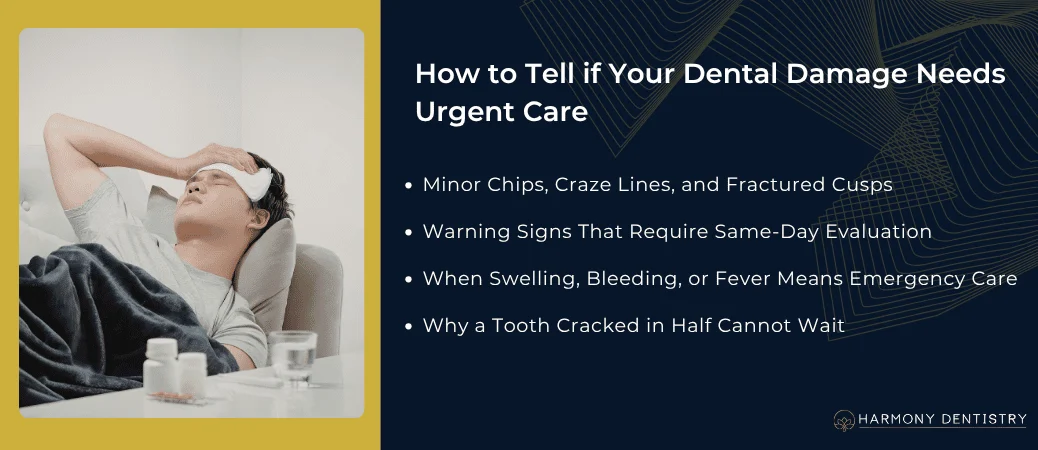
Some tooth damage really can wait a few days. A small chipped tooth that only affects the enamel usually does not hurt and is not urgent.
Craze lines fall into this same low-risk group. These are tiny hairline cracks in the enamel that many adults have. They do not go deep, and they do not usually need treatment at all.
A fractured cusp is a bit different. This happens when a piece of the chewing surface breaks off, often near an old filling. It can look alarming, but it rarely reaches the nerve and often causes little to no discomfort.
Still, you should get it looked at within a week or so, since a crown is usually needed to protect what is left of the tooth.
Warning Signs That Require Same-Day Evaluation
Some symptoms mean you should call your dentist today, even if the pain is mild. Watch for these signs:
- Pain when biting down, especially right when you release the bite
- New sensitivity to hot or cold that was not there before
- A rough or sharp edge that keeps cutting your tongue or cheek
- A feeling that your bite feels different than usual
- Small pieces of tooth continuing to break off over time
Any one of these can point to a tooth fracture that has gone deeper than the enamel.
On their own, they do not always mean an emergency. But together, or if they show up suddenly, they are a sign the crack may be moving toward the nerve. Waiting too long can turn a simple fix into a bigger one.
When Swelling, Bleeding, or Fever Means Emergency Care
Some symptoms mean you need help right away, not just soon. If you notice swelling in your face or gums, this is one of the clearest signs of infection.
Bleeding that will not stop after gentle pressure is another red flag. So is a fever, since it often means an infection has spread beyond the tooth itself.
A bad taste or smell coming from the area can also point to infection, even without obvious pain.
These signs mean you are dealing with a true dental emergency, and you should contact emergency dental care the same day.
Left untreated, infections can spread to other parts of your face or jaw, which makes fast action important.
Why a Tooth Cracked in Half Cannot Wait
A tooth cracked in half is one of the more serious situations you can face. This type of damage often starts as a smaller crack that slowly spreads with every bite until it splits the tooth into two pieces.
Once a split tooth happens, saving it becomes much harder. The same goes for a root fracture, which starts below the gumline and can be tricky to spot without an x-ray.
Both can be serious dental emergencies. Even if you do not feel much pain, a tooth cracked in half still needs prompt evaluation because bacteria can reach the inner pulp quickly.
The sooner you receive care, the better the chance of saving the tooth instead of needing an extraction.
What to Do Before Your Dental Appointment
A broken tooth without pain should still be evaluated by a dentist. A few simple steps can protect your tooth and keep you comfortable until you see your dentist.
Protect Sharp Edges and Save Any Broken Pieces
A broken tooth often leaves a sharp edge. This edge can cut your tongue, cheek, or lip if you’re not careful.
You can cover the sharp spot with dental wax from a drugstore. Just press a small piece over the rough area. This creates a smooth barrier and lowers your risk of cuts inside your mouth.
If a piece of your tooth broke off, don’t throw it away. Rinse it gently and place it in a small container with milk or your own saliva. Bring it to your appointment.
Your dentist may be able to use it during your broken tooth repair.
Choose Soft Foods and Avoid Chewing on the Tooth
Your broken tooth is more fragile than it looks, even without pain. Chewing on it could crack it further or cause it to break more.
Stick to soft foods like yogurt, mashed potatoes, scrambled eggs, and soup. These are gentle on your teeth and easy to eat.
Try to chew on the opposite side of your mouth. This takes pressure off the damaged tooth and helps prevent added tooth damage before your visit.
Avoid crunchy or hard foods like chips, nuts, or raw vegetables. Also skip sticky foods like caramel, since they can pull at the broken area.
Safe Ways to Manage Swelling and Discomfort
Even if you don’t feel pain now, some swelling or sensitivity can show up later. A cold compress held against your cheek can help keep swelling down. Use it for about 15 minutes at a time.
If you notice mild discomfort, you can take ibuprofen or another over-the-counter pain medication. Always follow the directions on the label.
Rinsing with warm salt water a few times a day can also help keep the area clean. This may lower your risk of irritation while you wait for your appointment.
What Not to Use as a Temporary Repair
It might be tempting to try a quick fix at home, but some methods can actually cause more harm. Avoid using super glue, nail polish, or other household adhesives on your tooth.
These products are not safe for your mouth and can damage your gums or remaining tooth structure.
Skip sugary gum or wax not made for dental use, since these can stick to the tooth in the wrong way. Don’t try to file down the sharp edge yourself, either. This can weaken the tooth further.
The safest choice is to protect the area with proper dental wax and wait for professional care.
When a Same-Day Crown Is the Right Repair
A broken tooth can still need a crown even when it doesn’t hurt. The decision depends on how much of the tooth is damaged, where the break extends, and whether enough healthy tooth structure remains.
At Harmony Dentistry, Dr. Jessica Barton evaluates these factors to determine whether a crown or another treatment is the right way to restore and protect the tooth.

How Crowns Protect a Weakened Tooth
A dental crown covers the whole visible part of a tooth. This spreads out the force of biting and chewing so the weak spots don’t take all the pressure.
When a tooth cracks or chips, the leftover structure can be fragile even if you don’t feel pain right away. Without a crown, everyday biting can cause the crack to spread deeper into the tooth.
A crown acts like a protective shell. It seals the tooth off from bacteria and food particles that could otherwise reach the inner layers and cause bigger problems later.
This is why dentists often recommend a crown even for a “quiet” broken tooth. Waiting too long can turn a simple fix into a more complicated one.
Same-Day Crowns Versus Temporary and Traditional Crowns
With traditional crowns, you usually need two visits. The first appointment involves shaping your tooth and taking a mold, then you wear a temporary crown while a lab makes your permanent one over the next couple of weeks.
Same-day crowns skip that waiting period. Your dentist designs, makes, and places the permanent crown in one visit, so you never need a temporary crown at all.
Here’s a quick side-by-side look:
| Feature | Same-Day Crown | Traditional Crown |
| Number of visits | 1 | 2 or more |
| Temporary crown needed | No | Yes |
| Wait time | None | 1-2 weeks |
| Material options | Mostly ceramic | Ceramic, metal, or combination |
Same-day crowns work well for many cases, but traditional crowns may still be the better choice for certain complex repairs.
Digital Impressions, CAD/CAM Technology, and In-Office Milling
Getting a same-day crown starts with tooth preparation, where your dentist gently shapes the broken tooth to make room for the crown.
After that, a small camera scans your tooth to create a digital impression instead of using the old-style putty mold.
This scan feeds into CAD/CAM technology, which stands for computer-aided design and computer-aided manufacturing.
Your dentist uses this software, sometimes called CEREC technology, to design your new crown right on a computer screen.
Once the design is ready, an in-office milling machine carves your crown out of a solid block of material. This whole process, from scan to finished crown, usually takes under 30 minutes.
Crown Materials, Fit, and Bite Alignment
Same-day crowns are typically made from ceramic material, which looks natural and works well for both front teeth and back teeth. Metal crowns are stronger for heavy chewing but are used less often today because they don’t blend in with your smile.
Crown fit matters a lot for comfort and function. Your dentist checks that the crown sits snugly against your tooth and gum line with no gaps where bacteria could sneak in.
Bite alignment is checked last. Your dentist will ask you to bite down so they can see how your new crown meets your opposite teeth, then make small adjustments until everything feels even and natural.
Other Treatment Options and Ways to Prevent Future Breaks
Not every broken tooth needs a same-day crown. Depending on how bad the damage is, restorative dentistry may involve a filling, root canal treatment, or another treatment to repair and protect the tooth.
And once your tooth is fixed, there are simple habits that can help protect it from cracking again.
Bonding and Veneers for Smaller Visible Chips
If your chip is small and doesn’t reach the deeper layers of your tooth, you may not need a crown at all. Dental bonding uses a tooth-colored resin to fill in the chipped area.
Your dentist shapes it to match your tooth, then hardens it with a special light. It’s quick, usually done in one visit, and costs less than a crown.
Porcelain veneers are another option if your front teeth have small cracks or chips you want to hide. These thin shells cover the front of your tooth to give it a smooth, even look.
Both bonding and veneers work best on minor damage. If your dentist finds the crack goes deeper, you’ll likely need a different treatment.
When Root Canal Treatment Is Needed Before a Crown
Sometimes a crack goes deeper than it looks. If it reaches the pulp, the inner part of your tooth with nerves and blood vessels, you’ll need root canal treatment before a crown can be placed.
During this procedure, your dentist or an endodontist removes the damaged pulp tissue, cleans out the space, and seals it. This step stops bacteria from spreading and helps prevent a painful infection later on.
You might not feel pain now, but a crack near the pulp can still lead to nerve damage or a hidden infection.
Once the root canal is done, your dentist will place a crown over the tooth. This protects it from further cracking and lets you chew normally again. Skipping this step can lead to tooth loss down the road.
Extraction and Tooth-Replacement Options for Unsalvageable Teeth

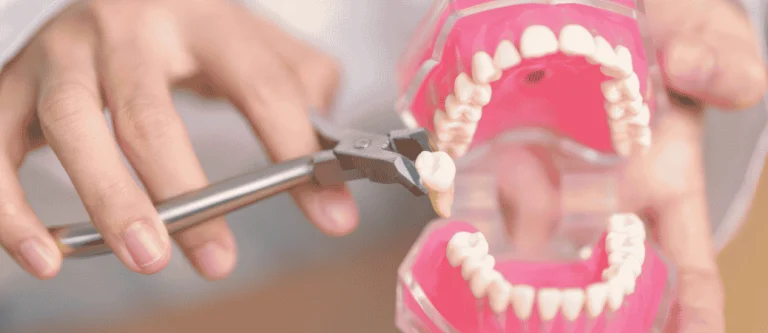
Some breaks are too severe to fix. If the crack extends below your gumline or splits the tooth into pieces, your dentist may recommend extraction.
This might sound scary, but it’s sometimes the safest choice to stop pain or infection from spreading.
After tooth extraction, you have a few options to replace the tooth:
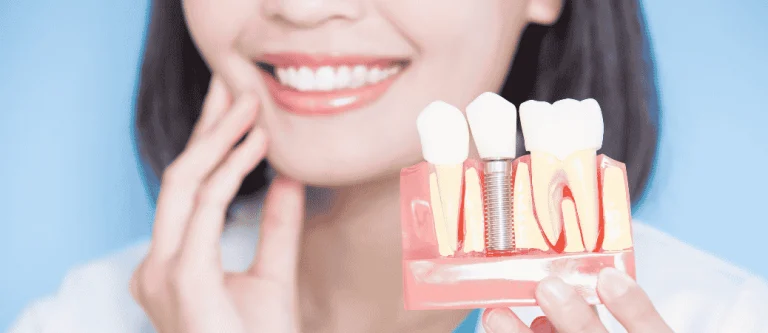
- Dental implant: A titanium post is placed in your jawbone, topped with a crown that looks and feels like a real tooth.
- Bridge: This fills the gap using your neighboring teeth for support.
- Denture: A removable option that can replace one tooth or several.
Your dentist can help you compare treatment options based on your dental needs and budget.
If cost is a concern, Harmony Dentistry accepts a range of dental insurance plans, financing options, and in-house membership plan to help make eligible care more manageable.
Reducing Fracture Risk With Daily Habits and Checkups
Small daily habits can make a big difference in protecting your teeth from future breaks. Here’s what helps most:
- Wear a night guard if you grind your teeth. Bruxism puts constant pressure on your teeth, which can wear them down or cause cracks over time.
- Avoid chewing on hard objects like ice, pens, or hard candy.
- Wear a mouthguard during sports to lower your risk of a sports injury that could chip or break a tooth.
- Keep up with oral hygiene by brushing and flossing daily to prevent tooth decay, which weakens your teeth.
- Watch out for large fillings, since heavily filled teeth are more likely to crack under pressure.
Scheduling regular dental checkups lets your dentist catch small problems, like early cracks or decay, before they turn into bigger, costlier repairs.
Frequently Asked Questions
Here are quick answers to common questions about broken teeth, pain levels, and when a crown is the right fix.
How long can I wait to treat a broken tooth if it does not hurt?
There is no safe amount of time to wait. A tooth can crack without hurting at all, and it can still get worse with every bite you take.
The break might feel stable for a week or two, then suddenly reach a nerve. Your best bet is to get it checked within a few days of noticing the damage.
Why would I need a crown for a broken tooth with no pain?
A crown protects what’s left of your tooth, even if nothing hurts right now. Teeth do not heal on their own the way skin or bone does, so a broken piece will not grow back or seal itself.
Without a crown, normal chewing can push the crack deeper. This raises your risk of infection or a full split later on.
Can a dentist place a crown on a tooth that has broken at the gum line?
Sometimes, but it depends on how much of the healthy tooth is left above the gum. If enough structure remains, your dentist can often build up the area and fit a crown over it.
If the break goes too far below the gum line, a crown may not be possible. In that case, your dentist might discuss other options, including extraction.
What could happen if I leave a chipped or cracked tooth untreated?
A small chip can turn into a bigger problem fast. Chewing forces can push the crack deeper into the tooth, especially if the crack runs toward the root.
Bacteria can also get into the area through the chip, even if you feel no discomfort. This can lead to infection, swelling, or a need for a root canal later.
Do I need a same-day crown if an old crown has chipped or broken off?
Yes, you should get this looked at right away. A broken or missing crown leaves the tooth underneath exposed, even if it does not hurt yet.
That exposed tooth can pick up new decay or crack further without protection. A same-day crown option can help you avoid a bigger repair down the road.
What are the alternatives to a crown for a cracked or broken tooth?
For small chips or surface cracks, dental bonding may work instead of a crown. This involves applying tooth-colored resin to fill in the damaged area.
If the crack has reached the inner pulp of the tooth, you may need a root canal before any crown or filling.
For teeth that are too damaged to save, extraction followed by an implant or bridge is another path your dentist might suggest.