A severe toothache has a way of making everything else in your day feel unimportant.
Whether it’s a dull throb that won’t quit or a sharp jolt when you bite down, that kind of pain usually means something is happening deep inside the tooth, and it needs attention soon.
When you finally sit in the dental chair, you may face a root canal vs tooth extraction decision.
Both treatments address a damaged or infected tooth, but they lead to different outcomes for your smile and oral health.
In many cases, saving a natural tooth with root canal treatment can preserve natural function and tooth structure, while extraction may be recommended when the tooth cannot be reliably restored.
The right answer depends on what your dentist finds during an exam, not on which option sounds less scary.
Understanding how that decision gets made can help you feel more in control before you even sit down for your evaluation.
Key Takeaways
- Whether a tooth can be saved depends on its remaining structure, the depth of infection, and the health of the surrounding gum and bone.
- The overall cost depends on whether the tooth can be restored and whether an extracted tooth will need to be replaced with an implant, bridge, or denture.
- Getting a second opinion may be helpful if you’re told a tooth cannot be saved.
Table of Content
- How Dentists Determine Whether a Tooth Can Be Saved
- What Happens During Each Procedure
- How Do Cost, Recovery, and Long-Term Function Compare?
- What Are Your Options After a Tooth Is Removed?
- Choosing the Treatment That Protects Your Smile
- Frequently Asked Questions
How Dentists Determine Whether a Tooth Can Be Saved
Dentists decide between root canal treatment and extraction by weighing several factors together: how much healthy tooth structure remains, how deep the decay or infection goes, whether the gum and bone around the tooth are stable, and whether the tooth can support a crown afterward.
No single sign makes the call alone.
At Harmony Dentistry, Dr. Anna Hinds starts by listening to your symptoms and concerns before evaluating the tooth and discussing whether preserving it or removing it may be the more appropriate option.
What Digital X-Rays and an Exam Can Reveal
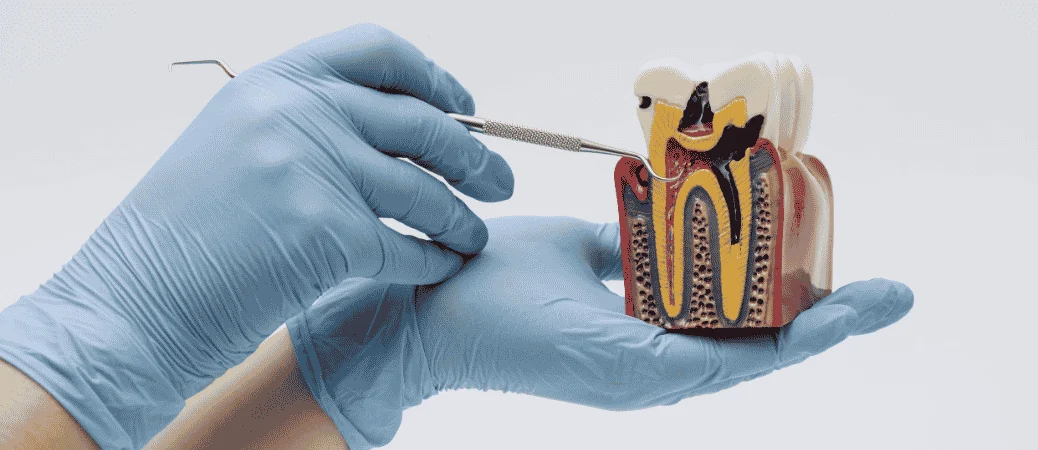
Digital x-rays show what’s happening below the surface of a damaged tooth.
They reveal the extent of tooth decay, whether the pulp (the nerve and blood vessel tissue inside the tooth) is infected or dead, and whether infection has spread into the bone around the root.
An exam adds information x-rays can’t capture alone, like whether a crack extends below the gumline or how much the tooth flexes under light pressure.
Together, imaging and a hands-on exam give your dentist a clear picture of whether the tooth is a good candidate for root canal treatment.
When Root Canal Treatment Has a Good Prognosis
A tooth generally has a good prognosis for root canal therapy when enough healthy structure remains to support a crown after the infected pulp is removed.
The infection needs to be contained within the tooth and root, without severe bone loss around it.
Teeth with deep decay or an infected pulp, but solid roots and supportive bone, are strong candidates.
If a tooth can be predictably saved and restored, root canal treatment may allow you to preserve your natural tooth rather than remove it.
When Extraction Is the Safer Choice
Extraction becomes the safer option when the damage goes beyond what a root canal can fix.
This includes a vertical root fracture, tooth decay so extensive that too little structure remains for a crown, or advanced periodontal disease causing severe bone loss around the tooth.
A failed root canal that can’t be successfully retreated is another reason extraction may be recommended.
In these situations, keeping the tooth could mean ongoing pain, repeated infections, or a fracture, so tooth extraction protects the surrounding teeth and bone from further complications.
When a Second Opinion May Help
If you are told a tooth cannot be saved, asking more questions before choosing extraction can help you understand why.
A second evaluation may help clarify whether root canal treatment, retreatment, or extraction is the most appropriate option based on the condition of the tooth.
What Happens During Each Procedure
Root canal treatment removes infected tissue from inside the tooth and seals it, while extraction removes the entire tooth.
Both procedures use local anesthesia to keep you comfortable, and sedation options exist for patients who feel anxious about either one.

How Root Canal Therapy Removes Infection and Preserves the Tooth
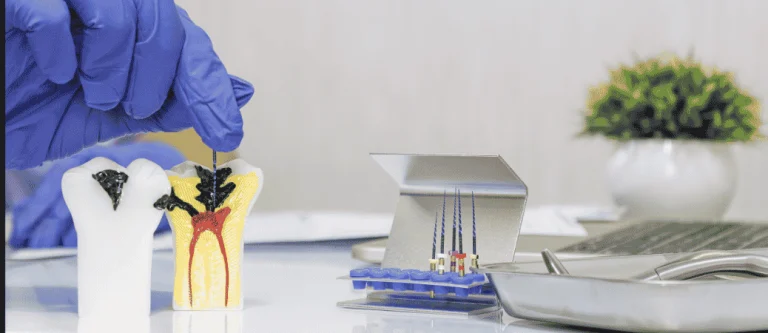
Root canal therapy clears out infected or dead pulp from inside the tooth and reseals the space to prevent reinfection.
Your dentist opens a small access point in the tooth, removes the diseased tissue from the root canals, then cleans and shapes the empty canals.
Once the canals are disinfected, they’re filled with a rubber-like material called gutta-percha and sealed.
Most teeth then need a crown to restore strength and protect against future fracture, since a tooth without its pulp becomes more brittle over time.
What to Expect During a Simple or Surgical Extraction
A simple extraction removes a visible, accessible tooth using local anesthesia and specialized tools, while a surgical extraction is needed when the tooth is broken at the gumline, impacted, or difficult to access.
Impacted wisdom teeth almost always require a surgical approach.
During a simple extraction, the dentist loosens the tooth and lifts it free.
Surgical extractions may involve a small incision in the gum tissue and, in some cases, removal of a small amount of bone to access the tooth.
Does Local Anesthesia or Sedation Make Treatment Comfortable?
Local anesthesia numbs the treatment area for both procedures, so you shouldn’t feel sharp pain during a root canal or extraction.
Most patients describe the experience as similar to getting a filling, with pressure but not pain.
Sedation options, from nitrous oxide to oral or IV sedation, are available for patients with dental anxiety or for longer, more complex procedures.
Talk with your dental team ahead of time about which option fits your comfort level and health history.


How Do Cost, Recovery, and Long-Term Function Compare?
The total cost of either option depends on the treatment required and whether an extracted tooth needs to be replaced.
Recovery and long-term care also differ between root canal treatment and extraction.
| Factor | Root Canal + Crown | Extraction + Replacement |
| Treatment approach | Preserves the natural tooth | Removes and replaces the tooth |
| Recovery | Depends on the tooth and treatment | Depends on extraction complexity |
| Natural tooth retained | Yes | No |
| Tooth replacement needed | No | Often recommended |
| Additional treatment | Crown may be needed | Implant, bridge, or denture may be considered |
What Is the True Cost of Saving vs. Replacing a Tooth?
The cost of treatment depends on the condition of the tooth, the procedure needed, and whether additional restorative care is required.
A root canal may also require a crown, while extraction may be followed by a dental implant, bridge, or denture.
Your actual cost depends on your location, the complexity of your case, whether bone grafting is needed, and your financing and dental insurance options, so ask your provider for a personalized estimate before deciding.
How Long Do Root Canal and Extraction Recovery Take?
Recovery differs between root canal treatment and extraction. After a root canal, you may have temporary tenderness around the treated tooth.
After an extraction, the socket needs time to heal and the blood clot needs to remain protected.
Recovery after an extraction depends on the tooth, the type of extraction, and individual healing.
You’ll need to protect the healing socket and follow your dentist’s aftercare instructions while the area heals.
How Does Tooth Loss Affect Bone, Bite, and Chewing?

Losing a tooth without replacing it leads to bone resorption in the jaw and changes to your bite over time.
The jawbone needs stimulation from tooth roots to maintain its density, so an empty socket gradually loses bone volume in the area.
This bone loss can shift neighboring teeth, alter your bite alignment, and make chewing less efficient.
Preserving a natural tooth can help maintain normal chewing function and avoid the changes associated with leaving an extraction space unfilled.
What Are Your Options After a Tooth Is Removed?
Replacing a missing tooth protects your bite, prevents shifting teeth, and preserves jawbone density.
The main tooth replacement options are dental implants, dental bridges, and dentures, each suited to different clinical needs and treatment preferences.
When a Dental Implant May Be Considered
A dental implant may be considered because it replaces the missing tooth and its root and can help restore function in the area.
Dental implants work well for patients with adequate bone volume and good overall health.
If you’re only replacing one tooth, a single tooth dental implant avoids the need to alter neighboring healthy teeth, unlike a bridge.
When a Dental Bridge or Partial Denture May Make Sense
A dental bridge or partial denture makes sense when implant placement isn’t possible or when a patient prefers a non-surgical option.
A bridge anchors to the teeth on either side of the gap, though this requires filing down those adjacent teeth to support it.
Partial dentures replace one or more missing teeth with a removable appliance and may be considered when a removable, non-surgical option better fits your needs.
Why Bone Grafting and Timing Matter After Extraction
Bone grafting after extraction helps preserve jawbone density when implant placement will happen later. Replacing a tooth sooner rather than later reduces the amount of bone resorption that occurs, which can affect how straightforward implant placement will be down the road.
Waiting too long after extraction can also let neighboring teeth drift into the empty space, leading to overcrowding and bite changes.
If you’re weighing your options, this guide on jawbone loss after missing teeth explains why timing matters for long-term oral health.
Choosing the Treatment That Protects Your Smile

Choosing between root canal treatment and tooth extraction comes down to whether your natural tooth can be predictably saved and restored.
When the tooth can be predictably restored, preserving it may help maintain natural function and avoid the need for tooth replacement.
When the damage is too extensive for the tooth to be restored, extraction may be recommended, followed by a discussion about appropriate tooth replacement options.
Either way, a severe toothache deserves a prompt evaluation rather than guesswork at home.
The team at Harmony Dentistry can walk you through digital imaging, a full exam, and an honest conversation about which option fits your specific tooth and your goals for your smile.
Frequently Asked Questions
Is a root canal better than a tooth extraction?
When a tooth can be predictably saved and restored, root canal treatment may allow you to preserve your natural tooth.
Extraction may be recommended when damage or bone loss makes restoration unlikely to succeed.
Can an infected tooth always be saved with a root canal?
Not every infected tooth can be saved. If the infection has caused severe bone loss, the tooth has a vertical root fracture, or too little healthy structure remains to support a crown, extraction may be the safer and more predictable choice.
Is a root canal more painful than having a tooth pulled?
Recovery differs between the two procedures because an extraction leaves a socket that needs time to heal.
Your experience can depend on the condition of the tooth, the procedure performed, and your individual healing response.
How soon should I replace a missing tooth after an extraction?
Replacing a missing tooth soon after extraction helps limit bone loss and prevents neighboring teeth from shifting into the gap.
Your dentist can recommend a timeline based on whether you’re considering a dental implant, bridge, or denture, and whether bone grafting is part of your plan.
Can a failed root canal be treated without extracting the tooth?
A failed root canal can sometimes be treated with endodontic retreatment, where the tooth is reopened, cleaned again, and resealed.
A dental evaluation can determine whether retreatment may be appropriate or whether extraction is the more reliable option for that specific tooth.