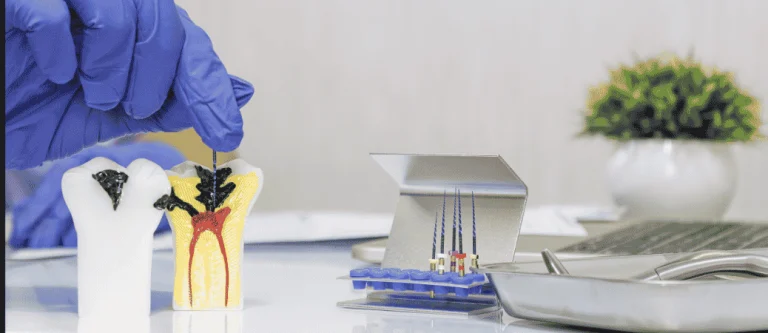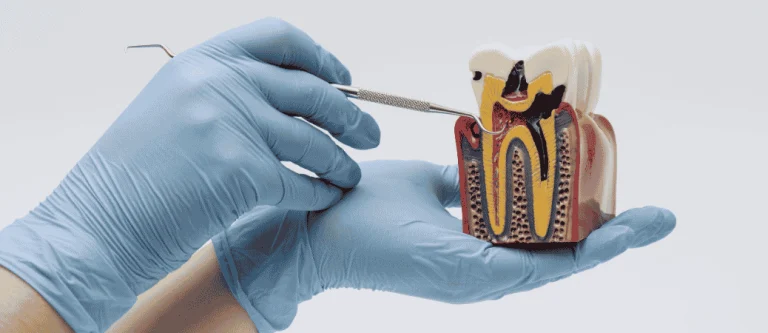
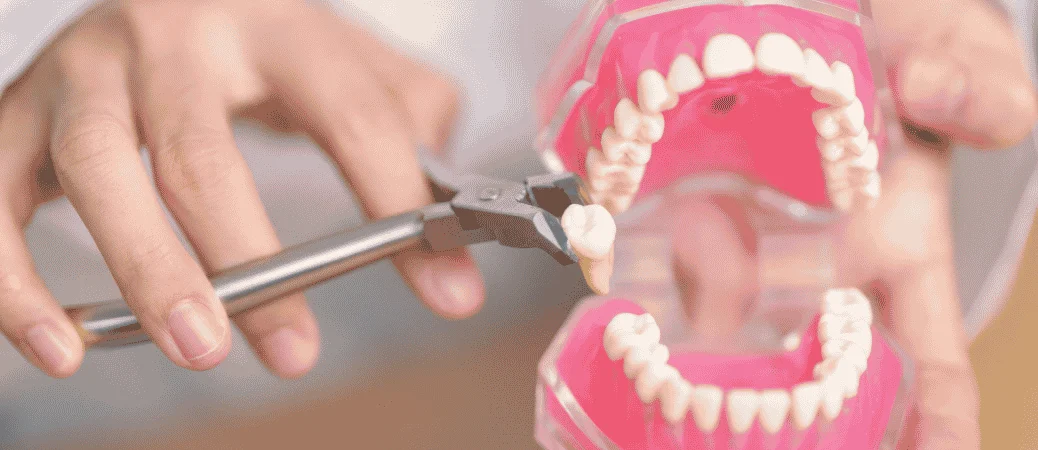
A cracked molar, throbbing pain that keeps you up at night, or swelling along your jaw are all signs that you shouldn’t wait for your next routine checkup.
If you have severe pain, visible swelling, a broken tooth, or signs of infection, you need emergency dental care right away, and in some cases a tooth removal is the safest way to protect your oral health.
Prompt dental care can help relieve pain and determine whether the tooth can be saved or needs to be removed.
A tooth extraction in Fortville IN may be recommended for severe decay, advanced gum disease, infection, or damage that cannot be repaired.
Knowing what to watch for, what happens during the visit, and how to care for the area afterward can make the whole thing feel a lot less stressful.
Key Takeaways
- Sharp pain, swelling, or signs of infection mean you should call a dentist the same day.
- Tooth extraction may be the safest choice when a tooth is badly decayed, cracked, or infected.
- Protecting the blood clot after removal helps you heal well and keeps your options open for replacing the tooth.
Table of Content
- Signs You Need Urgent Dental Care
- When Extraction May Be the Safest Treatment
- What Happens at an Emergency Extraction Visit
- How to Protect the Extraction Site During Recovery
- Where to Get Help in Fortville, IN
- Replacing a Tooth After Removal
- Frequently Asked Questions
Signs You Need Urgent Dental Care
Some dental problems can wait for a regular appointment, but others need help the same day.
Pain that keeps you up at night, swelling in your face, a tooth that breaks below the gumline, or bleeding that won’t stop are all reasons to call an emergency dentist in Fortville right away.
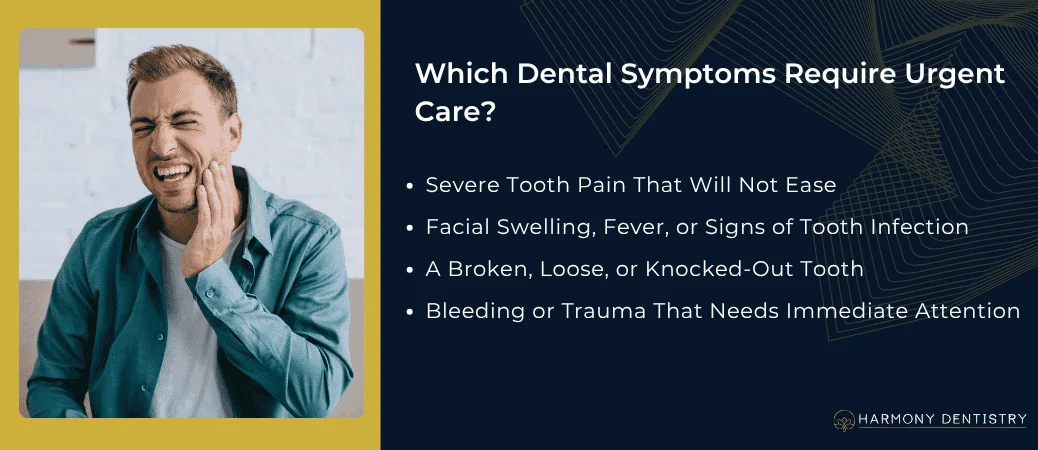
Severe Tooth Pain That Will Not Ease
A mild toothache after eating something cold usually settles down. Severe tooth pain that sticks around is different.
Watch for pain that:
- Doesn’t respond to ibuprofen or acetaminophen
- Wakes you up or keeps you from sleeping
- Throbs when you lie down
- Spreads to your jaw, ear, or neck
That kind of ongoing discomfort spreading to your jaw or ear often points to a problem inside the tooth, like deep decay reaching the nerve.
A dentist may still be able to save it with a root canal, but you won’t know until someone takes an X-ray.
Waiting rarely helps. Pain that bad usually means the issue is getting worse, not better.
Facial Swelling, Fever, or Signs of Tooth Infection
An infected tooth is the reason most people end up needing an emergency dental extraction.
Once bacteria reach the pulp inside your tooth, the infection can push into the surrounding bone and soft tissue.
Call your dentist today if you notice:
| Sign | What it may mean |
| Puffy gums or a bump near the tooth | Abscess forming |
| Swelling in your cheek or jaw | Infection spreading |
| Bad taste or pus draining | Abscess is leaking |
| Fever | Your body is fighting the infection |
Go to an emergency room, not just a dental office, if you develop a fever over 101°F or trouble swallowing or opening your mouth.
Swelling that reaches your eye or throat needs medical attention immediately.
A Broken, Loose, or Knocked-Out Tooth
A chipped edge is annoying. A broken tooth that cracks below the gumline is a dental emergency.
Here’s how to handle each situation:
- Broken teeth: Save any pieces, rinse your mouth with warm water, and call your dentist. If a lot of the tooth is gone, extraction may be the only option.
- Loose adult tooth: Don’t wiggle it. Gum disease or a blow to the mouth can loosen a tooth, and quick care sometimes saves it.
- Knocked-out tooth: Pick it up by the crown, never the root. Rinse it gently, then put it back in the socket or in a cup of milk. Get to a dentist within 30 to 60 minutes for the best chance of saving it.
Bleeding or Trauma That Needs Immediate Attention
Gums bleed a little after flossing sometimes. Bleeding that won’t stop is another matter.
Bite down on clean gauze for 15 to 20 minutes. If blood is still flowing after that, you need emergency dental care.
Mouth injuries from sports, falls, or car accidents deserve a same-day look even when nothing seems broken. A tooth can be pushed out of position or cracked inside where you can’t see it.
Also call if you have a deep cut on your lip, tongue, or cheek, or if your jaw feels out of line. And don’t try to pull a tooth yourself at home.
You risk leaving root fragments behind and creating an infection that’s harder to treat than the original problem.
When Extraction May Be the Safest Treatment
Most dentists in Fortville try to save your natural tooth first with fillings, crowns, or root canal therapy.
But sometimes a tooth is too damaged, too infected, or too crowded to keep, and removing it protects the rest of your mouth.
Severe Tooth Decay or an Unsalvageable Tooth
Tooth decay starts small. Left alone, it eats through the enamel, reaches the soft inner pulp, and can cause an abscess.
If enough of the healthy tooth remains, a crown or root canal usually fixes the problem. When the decay reaches below the gumline or destroys most of the tooth structure, there is nothing left to build on.
That is when your dentist may recommend a tooth extraction for severe decay, especially if you also have swelling or pain that spreads to your jaw, ear, or neck.
A visible tooth often comes out with a simple extraction. A tooth broken off at the gumline usually needs a surgical extraction, where the dentist makes a small opening in the gum to reach it.
Advanced Gum Disease and Loose Teeth
Gum disease does not just affect your gums. In its later stages, it destroys the bone that holds your teeth in place.
Once that bone is gone, the tooth loosens. You may notice it shifting when you chew or feel like it moves when you press on it with your tongue.
Deep cleanings and gum treatment can stop the disease from spreading. But a tooth with very little bone support usually cannot be saved, and advanced gum disease is a common reason for extraction.
Removing a hopeless tooth also lowers your risk of repeat infection. It gives your dentist a clean starting point for a bridge, implant, or partial denture.
Impacted Wisdom Teeth and Other Third Molars
Your third molars, better known as wisdom teeth, usually show up in your late teens or early twenties. Many mouths simply do not have room for them.
When a wisdom tooth cannot fully break through the gum, it is called impacted. It may grow sideways, push against the tooth in front of it, or stay trapped in the jawbone.
Watch for these signs:
- Aching or pressure at the back of your jaw
- Swollen, tender gum tissue behind your last molar
- A bad taste or trouble opening your mouth wide
- Food that keeps packing into a partly covered tooth
Impacted teeth are hard to clean, so they trap bacteria and often decay. Wisdom teeth removal for an impacted tooth is a surgical tooth extraction, and your dentist may remove more than one at the same visit.
Crowding or Preparation for Orthodontic Treatment
Not every extraction happens because of pain. Sometimes a healthy tooth comes out to make room.
If your jaw is too small for all your teeth, they overlap and twist. Crowded teeth are harder to brush and floss, which raises your risk of decay and gum problems.
Orthodontists often ask for one or two premolars to be removed before braces or aligners begin. That space lets the remaining teeth shift into a straighter line.
Your dentist and orthodontist plan this together, usually with X-rays and a review of your bite. These extractions are scheduled ahead of time, not treated as an emergency.
What Happens at an Emergency Extraction Visit
An emergency dental appointment moves faster than a routine visit, but the steps stay the same: your dentist checks your mouth, reviews your health history, takes x-rays, numbs the area, and then removes the tooth.
Some teeth can still be saved, so your dentist will talk through those choices before reaching for any instruments.
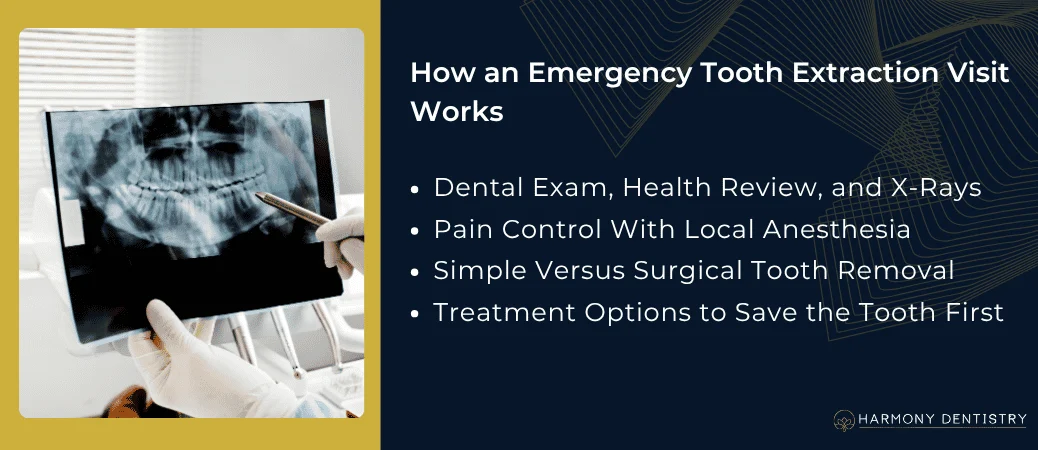
Dental Exam, Health Review, and X-Rays
Your visit starts with a focused dental exam. The dentist looks at the painful tooth, checks the gum tissue around it, and gently taps or presses to find the source of the trouble.
Next comes a quick health review. Tell the team about every medicine you take, including blood thinners, supplements, and anything you buy over the counter.
Blood thinners can change how much you bleed, and patients on newer antithrombotic medications need specific protocols to keep bleeding under control.
Mention diabetes, too, since it can slow healing. Bisphosphonate drugs for osteoporosis matter as well, because they carry a risk of poor jawbone healing after a tooth comes out.
Then you’ll get x-rays. Images show the shape of the roots, how much bone is left, and whether infection has spread past the tip of the root.
Pain Control With Local Anesthesia
Local anesthesia is used to numb the area and minimize discomfort during the extraction. Your dentist applies the anesthetic near the tooth and checks that the area is fully numb before starting.
Here’s what to expect once you’re numb:
- Pressure and movement: yes, you’ll feel this
- Sharp pain: no, and speak up right away if you do
- Sound: some creaking or popping is normal
If you’re very anxious or several teeth need to come out, ask about the sedation options available for your treatment.
Simple Versus Surgical Tooth Removal
Not all extractions look alike. Which type you need depends on how much tooth is above the gum line and how the roots sit in the bone.
| Simple Extraction | Surgical Extraction | |
| When it’s used | Tooth is visible and intact | Tooth is broken at the gum line, impacted, or has curved roots |
| How it’s done | Loosened with an elevator, lifted out with forceps | Small gum incision; tooth may be sectioned into pieces |
| Stitches | Rarely | Often |
In a simple extraction, your dentist loosens the tooth with elevators and removes it with forceps. A surgical tooth extraction adds a few steps, and sometimes a small amount of bone is trimmed away to free the root.
Your dentist will pack the socket with gauze afterward and go over aftercare with you.
Treatment Options to Save the Tooth First
Pulling the tooth isn’t always the first answer. Your natural tooth is worth keeping when the structure underneath is still solid.
Root canal therapy is the most common alternative. If the pulp is infected but the roots and surrounding bone are healthy, cleaning out the canal and sealing it can stop the pain and keep the tooth in place.
A crown may follow to protect what’s left. For a cracked tooth that hasn’t split below the gum line, a crown alone sometimes does the job.
Extraction becomes the better choice when a tooth is too decayed, cracked, loose, or damaged to stay safely in place.
Ask your Fortville dentist which dental treatments make sense for your specific tooth, and what the timeline and cost look like for each one.
How to Protect the Extraction Site During Recovery
Getting through the first week after a tooth extraction comes down to a few simple habits: guard the blood clot, keep swelling down, use your medications correctly, and know which symptoms mean you should call your dentist.
Protecting the Blood Clot and Preventing Dry Socket
A blood clot forms in the socket right after your tooth comes out. That clot protects the bone and nerve endings underneath, so keeping it in place is your main job for the first 24 to 48 hours.
Dry socket happens when the clot comes loose too early. It usually shows up two to four days later as a deep, throbbing ache that can spread toward your ear.
To keep the clot where it belongs:
- Skip straws. The suction can pull the clot right out.
- Don’t spit or swish. Let water or saliva fall out of your mouth instead.
- No smoking or vaping for at least 72 hours.
- Wait 24 hours to rinse. After that, a gentle warm salt water rinse helps keep the area clean.
- Brush your other teeth normally, but stay away from the extraction site.
Soft foods like yogurt, mashed potatoes, and scrambled eggs are your friends. Avoid nuts, chips, popcorn, and rice, since small pieces can get trapped in the empty socket.
Managing Swelling and Discomfort
Swelling usually peaks around 48 to 72 hours, then starts going down. Some bruising along the jaw or cheek is normal too.
Cold works best early on. Hold an ice pack wrapped in a thin towel against your cheek for 15 to 20 minutes at a time, then take it off for 20 minutes. Repeat this during the first day or two.
After 48 hours, switch to a warm compress. Heat helps loosen up a stiff jaw and moves fluid out of the area.
A few other things help:
- Prop your head up with an extra pillow when you sleep.
- Rest for the first 24 hours and skip the gym for two to three days.
- Avoid hot drinks and hot soup while the area is still fresh.
Some tips for reducing swelling and healing faster also include keeping your head above your heart during the day.
Using Pain Medication and Antibiotics Safely
Most people do fine with over-the-counter pain medication. Ibuprofen works well because it handles both pain and swelling.
Acetaminophen is a good option if you can’t take ibuprofen.
Take your first dose before the numbness wears off. It’s much easier to stay ahead of discomfort than to catch up later.
| Medication | What it does | Notes |
| Ibuprofen (Advil, Motrin) | Eases pain and swelling | Take with food |
| Acetaminophen (Tylenol) | Eases pain | Watch your total daily amount |
| Prescription pain medication | For surgical extractions | Don’t drive after taking it |
| Antibiotics | Treats certain bacterial infections when prescribed | Take exactly as directed |
If your dentist prescribes antibiotics, take them exactly as directed and contact the dental office if you have questions or experience side effects.
Skip aspirin unless your dentist says it’s okay, since it can thin your blood and restart bleeding.
When to Contact the Dental Office After Treatment
Light bleeding and oozing for the first day is expected. Bite down on clean gauze for 20 minutes if it picks up again.
Call your Fortville dental office if you notice:
- Bleeding that won’t stop after 30 to 45 minutes of steady pressure
- Pain that gets worse after day three instead of better
- Fever above 101°F, chills, or feeling generally sick
- Pus or a bad taste coming from the extraction site
- Swelling that spreads toward your eye, neck, or throat
- Trouble swallowing or breathing: seek emergency medical care immediately.
- Numbness in your lip, chin, or tongue that lasts more than a day
- Stitches that come out early or a socket that looks empty and white
Reaching out early keeps a small problem from turning into a bigger one for your oral health. Your dental team would much rather hear from you than have you wait it out.
Where to Get Help in Fortville, IN
Fast action makes a big difference when a tooth needs to come out. Knowing who to call, when the hospital is the better choice, and how you’ll pay can save you time and stress.
When to Call a Fortville Dental Office
If you have a cracked molar, badly decayed tooth, or swelling around the gums, contact Harmony Dentistry for guidance on how quickly you should be evaluated.
Dr. Jessica Barton focuses on helping patients feel comfortable while making treatment decisions based on the condition of the tooth and their overall oral health.
When you contact the Fortville office, be ready to describe:
- Where the pain is and how long it has lasted
- Any swelling, fever, or bleeding
- Recent injuries to the tooth or jaw
- Medications you take, especially blood thinners
When to Seek Emergency Room Care Instead
Some situations go beyond what a dental office can handle. Head to the ER or call 911 if you notice:
- Swelling that spreads to your eye, neck, or floor of your mouth
- Trouble breathing or swallowing
- Bleeding that won’t stop after 20 minutes of firm pressure
- High fever with facial swelling, which can signal a spreading infection
- A broken jaw or serious injury from an accident
Keep in mind that most hospitals don’t pull teeth. Staff will usually treat the infection with antibiotics, manage your pain, and send you to a dentist for the extraction.
That’s why a dental office is still the better first stop for a routine dental emergency like a painful tooth without swelling.
Planning for Costs, Dental Insurance, and CareCredit
Tooth extraction cost depends on the type. A simple extraction usually runs less than a surgical one, which involves cutting gum tissue or removing bone.
Dental insurance coverage for tooth extraction varies by plan. Harmony Dentistry can help you understand your benefits and available payment options before treatment.
No insurance? Ask about these options:
| Option | How It Helps |
| Harmony Smiles Membership Plan | Includes preventive care and treatment discounts for members |
| CareCredit | Offers financing options for eligible dental care |
| Cherry | Offers payment plan options for eligible treatment |
| Proceed Finance | Provides financing options for eligible dental care |
Harmony Dentistry offers dental insurance and financing options to help patients understand available ways to manage eligible treatment costs.
Replacing a Tooth After Removal
Once your gums heal from tooth removal, you have a few solid ways to fill the gap, including dental implants, bridges, partial dentures, and full dentures.
The right pick depends on how many teeth are missing, your jawbone condition, and your budget.


Dental Bridge Options for a Single Missing Tooth
A dental bridge uses the teeth on either side of the gap as anchors. Your dentist shapes those two teeth, then cements a set of connected crowns over them with a replacement tooth in the middle.
Bridges work well when the neighboring teeth are strong and healthy. They can also replace a string of consecutive teeth, not just one.
Here’s what to keep in mind:
| Feature | What to Expect |
| Time to finish | Usually two visits over a few weeks |
| Fixed or removable | Cemented in place, so it doesn’t come out |
| Trade-off | Healthy enamel gets trimmed from anchor teeth |
Bridges don’t replace the tooth root, so the bone under the gap can still shrink over time.
Partial Dentures and Full Dentures
Partial dentures are a good fit when you’re missing one tooth or several in a row. They use a gum-colored plastic base with artificial teeth attached, and clasps hold the piece against your natural teeth.
Full dentures replace an entire upper or lower arch. Both types come out at night for cleaning.
Dentures provide a removable option for replacing several missing teeth or a full arch.
Because they rest on the gums rather than in the jaw, they can shift while eating and may need adjustments or relining as your mouth changes.
Why Timely Replacement Supports Oral Health
Leaving a gap open affects more than your smile. Nearby teeth slowly tip toward the empty space, and the tooth above or below it can drift down or up.
That movement changes how your teeth meet when you bite. Over time, your bite, jawbone, and chewing function can all be affected.
Chewing matters for your overall health, too. When gaps make certain foods hard to eat, your diet often narrows.
Talk with your Fortville dentist about a plan before you finish healing. Knowing your next step keeps your dental health on track and avoids problems that cost more to fix later.
Frequently Asked Questions
Knowing the difference between a toothache that can wait and one that needs same-day care can save you a lot of pain and money.
Below are answers to the questions people in Fortville ask most when a tooth suddenly turns into a problem.
When does tooth extraction become an emergency?
An extraction becomes urgent when the tooth is causing harm beyond the tooth itself. That usually means a spreading infection, a fracture below the gum line, or pain that medication no longer controls.
Trauma counts too. A tooth knocked loose or broken in an accident often needs quick attention, and severe infection, uncontrollable pain, or trauma are the three situations most likely to move you to the front of the schedule.
How long can I safely wait to have a painful tooth removed?
There is no set number of days, because it depends on what is causing the pain. A mildly sensitive tooth can often wait for a regular appointment. A tooth with an active infection cannot.
Waiting has real costs. Putting off treatment can lead to worse pain, spreading infection, and damage to nearby teeth, which can turn a simple extraction into a longer, more expensive procedure.
If the pain is keeping you awake or getting worse each day, call rather than wait it out.
What symptoms mean I need emergency dental care right away?
Call a dentist the same day if you notice any of these:
- Pain that over-the-counter medicine will not touch
- Swelling in your face, jaw, or under your chin
- A bad taste or pus draining near a tooth
- Fever along with tooth pain
- Bleeding that will not stop
- A tooth that is loose or broken after an injury
- Trouble opening your mouth, swallowing, or breathing
That last one is the most serious. Trouble breathing or swallowing means you should go to an emergency room, not wait for a dental office to open.
Can an infected or abscessed tooth wait until a regular appointment?
No. An abscess is a pocket of infection, and it does not clear up on its own.
Even if the pain suddenly stops, the infection is still there. Pain often fades when the nerve inside the tooth dies, which feels like improvement but actually means the problem is moving deeper.
Antibiotics can slow an infection down, but they do not fix the tooth. You still need the tooth treated or removed, and delaying that treatment can cause more harm than good.
Is severe swelling after a tooth problem a reason to seek urgent treatment?
Yes. Swelling means the infection has moved out of the tooth and into the surrounding tissue.
Watch how fast it changes. Swelling that grows over a few hours, closes your eye, spreads down your neck, or makes it hard to swallow needs care immediately.
You can hold a cold compress on the outside of your cheek for comfort while you arrange care. Do not apply heat, since warmth can encourage the infection to spread.
What should I do if I have intense tooth pain and cannot get a same-day appointment?
Contact Harmony Dentistry as soon as possible if you have intense tooth pain and need urgent care. If a same-day dental visit is not available, the team can advise you on appropriate next steps based on your symptoms.
While you wait, these steps can help you stay comfortable:
- Take an over-the-counter pain reliever as directed on the label.
- Rinse with warm salt water a few times a day to keep the area clean.
- Use a cold compress on your cheek for 15 minutes at a time.
- Sleep with your head raised on an extra pillow to reduce throbbing.
- Stick to soft, lukewarm foods and chew on the other side.
Skip the old trick of placing aspirin directly on the gum. It burns the tissue and does nothing for the tooth.
If pain comes with fever, facial swelling, or trouble breathing and no dentist is available, head to an urgent care center or emergency room.