If you have lived with a gap in your smile for five, ten, or even thirty years, you may have quietly assumed the window for implants closed a long time ago.
That assumption keeps a lot of good candidates from ever asking the question.
Dental implants after years of missing teeth may still be possible, but eligibility depends more on your current oral health than on how long the tooth has been gone.
Long-term tooth loss does change things. Bone shrinks without a root to stimulate it, and nearby teeth drift into the open space.
Those changes add steps to a treatment plan, and they can often be corrected.
Patients who were told “no” a decade ago frequently hear a different answer today, because grafting materials and 3D planning have moved forward.
Key Takeaways
- Elapsed time alone does not disqualify you; bone volume, gum health, bite space, and medical stability do the deciding.
- A consultation with 3D imaging is the only reliable way to know what your jaw can support and what preparation it needs.
- Bone grafting, a sinus lift, or gum treatment can rebuild a foundation before implant placement, which lengthens the timeline but often makes treatment possible.
Can You Still Qualify After a Long Gap?
Yes, many people do. Even patients who have been missing teeth for decades still qualify, as long as there is enough healthy bone (or enough bone that can be rebuilt) and gum tissue that is free of active infection.
Why Time Since Tooth Loss Is Not the Only Eligibility Factor
Two people can both have a 12-year-old gap and get completely different answers. One has kept a fairly full ridge of bone; the other has lost significant height and width.
Adjacent teeth also drift and tip into an open space. That can shrink the room available for a crown and create bite problems.
If you want the fuller picture on how gaps affect the jaw over time, our post on missing teeth and jawbone loss covers that ground.
The Core Requirements for Implant Candidacy
Implant candidacy comes down to a short list your dentist can check:
- Bone density and quality at the site, with enough height and width for implant stability
- Healthy gum tissue with no untreated gum disease
- Enough space between and above the adjacent teeth for the final crown
- General health stable enough for a minor oral surgery and months of healing
- Consistent oral hygiene you can keep up with long term
A good candidate for dental implants has adequate jawbone, healthy gums, and a willingness to stay on top of daily care.
Is There an Age Limit for Dental Implants?
Older age alone does not necessarily prevent someone from receiving dental implants. Overall health, healing ability, bone condition, and medical history are generally more important considerations.
Younger patients are the exception on the other end. Implants wait until jaw growth finishes, usually the late teens for girls and slightly later for boys.
What Does an Implant Consultation Check?
A dental implant consultation helps determine what your jaw can support today and what preparation may be needed before implant placement.
At Harmony Dentistry, Dr. Jessica Barton brings experience from placing more than 1,000 dental implants and teaching implant dentistry to other clinicians.
Your evaluation includes a clinical exam, a review of your medical and dental history, and diagnostic imaging.
How 3D Imaging Measures Bone and Available Space
Digital X-rays show the basics, while advanced technology such as 3D imaging can provide a more detailed view of the jawbone and surrounding structures.
That scan is what turns a guess into a plan. Implant planning software lets the implant dentist place a virtual implant in your actual anatomy before anyone picks up an instrument.
The scan also measures the gap itself. If neighboring teeth have tipped in, there may not be room for a properly sized crown, and minor orthodontic movement enters the conversation.
Why Gum Disease and Bite Changes Must Be Assessed
Gum disease has to be under control first. Gingivitis and periodontitis create the same bacterial environment that later causes implants to fail, so the exam includes pocket depths and bleeding points around every remaining tooth.
Your bite gets measured too. A tooth that has over-erupted from the opposite arch can crowd the space or overload the new implant every time you chew.
How Medical History Affects Surgical Readiness
Bring your full medication list and any physician contacts.
Conditions that change the plan include heart conditions, blood thinners, uncontrolled diabetes, osteoporosis treated with bisphosphonates, immune disorders, and recent radiation therapy or chemotherapy to the head and neck.
Diabetes and other medical conditions do not automatically rule out implant treatment, but their management and effect on healing should be considered during treatment planning.
How Can Bone and Gum Issues Be Treated First?
Bone loss and gum disease are treatable conditions, and treating them is a normal first phase of implant care.
Grafting rebuilds a foundation where bone has resorbed, and periodontal therapy calms the tissue so healing has a fair chance.
When Bone Grafting May Create a Stable Foundation
A bone graft adds material to a thin or shallow ridge. Over several months, your own bone grows into that material and replaces it, creating enough volume to hold an implant securely.
Small grafts sometimes happen at the same appointment as implant placement. Larger defects need their own healing period first, often four to six months, before the titanium post goes in.
When a Sinus Lift or Ridge Augmentation Is Considered
Upper back teeth sit under the sinus cavity, and that cavity expands downward after tooth loss. A sinus lift gently raises the sinus membrane and packs bone underneath it, giving an implant the height it needs.
Ridge augmentation handles the opposite problem: a ridge that has grown too narrow front to back. Our sinus lifts and bone grafting page explains how each option fits into a plan.
Why Periodontal Treatment and Smoking Changes Come Before Surgery
Active periodontitis has to be treated before an implant goes anywhere near it.
Scaling, root planing, and a maintenance schedule bring the tissue back to health, and periodontal treatment is a standard first step for anyone with pocketing or bleeding gums.
Smoking can interfere with healing and may increase the risk of implant complications.
Discussing your smoking habits openly with your dental team can help them plan treatment and recovery appropriately.
What Is the Timeline From Evaluation to Final Restoration?
The dental implant timeline varies based on your bone condition, whether grafting is needed, how your body heals, and the type of restoration being placed. Additional procedures can extend the overall treatment time.
When Delayed Implant Placement May Be Needed
Delayed implant placement means the site heals first, then the implant goes in. If you still have a failing tooth to remove, the extraction site takes roughly three to four months to fill in with bone.
Grafted sites follow the same logic on a longer clock. Waiting protects the implant’s stability, and rushing this stage is where problems start.
How Implant Surgery and Osseointegration Work
Implant surgery places a small titanium post into the jaw, usually under local anesthetic, in about an hour for a single site. Most people describe the recovery as easier than the extraction that preceded it.
Osseointegration takes time as the bone heals around the implant. The healing period varies based on the implant site, bone condition, overall health, and individual healing response.
What Affects the Time Needed for a Crown or Denture
Once the implant is stable, impressions and lab fabrication for the final restoration take a few weeks. A single tooth dental implant moves faster than a full arch.
Full-arch cases using implant dentures or an All-on-4 approach involve more components and more try-in visits.
Traditional partial dentures, complete dentures, and dental bridges remain reasonable tooth replacement options if the timeline or the surgery does not fit your situation.
A Personalized Plan Can Make Delayed Treatment Possible
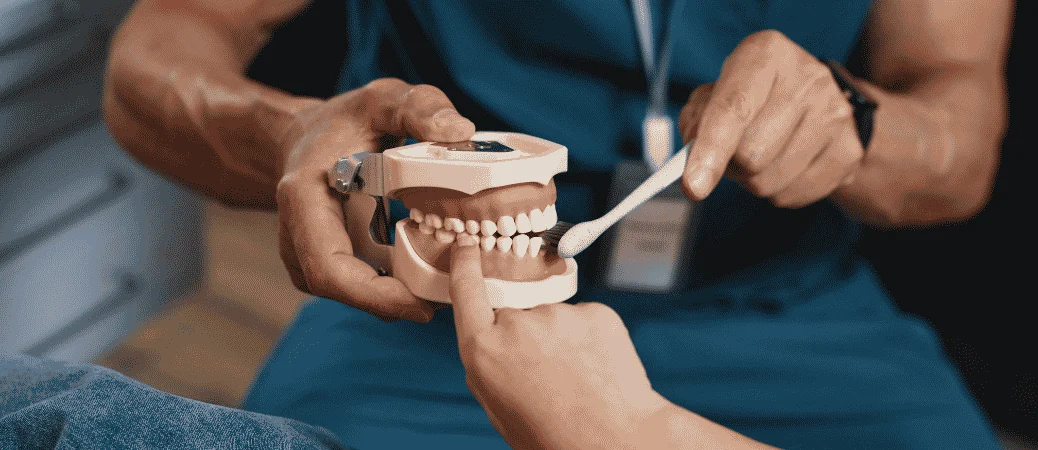
Waiting years does not close the door. Implant candidacy rests on what a 3D scan finds in your jaw today, the state of your gums, the space left by shifting teeth, and how well your body heals.
Some plans start with grafting or gum therapy. Others move straight to placement. Either way, the answer comes from an implant consultation and imaging, never from a calendar count.
Good oral hygiene and regular dental visits remain important after treatment because inflammation and infection around an implant can threaten its long-term health.
If you have been assuming dentures or a bridge were your only remaining tooth replacement options, a conversation about dental implants may open up more than you expect.
Frequently Asked Questions
Is it too late to get a dental implant after 10 years?
Ten years without a tooth does not automatically mean you are no longer eligible for an implant. A 3D evaluation can show how much bone remains and whether grafting or another preparatory procedure may be needed.
What disqualifies someone from getting dental implants?
Few things disqualify someone permanently. Active untreated gum disease, uncontrolled diabetes, recent head and neck radiation, and certain bone medications all require attention before surgery, and most become manageable with treatment or physician coordination.
Will I need a bone graft if I have been missing a tooth for years?
Some people do, some do not. Lower jaw sites and gaps where neighboring teeth held the ridge in place frequently have enough bone without grafting. Upper back molar sites near the sinus need a sinus lift more often.
Should a 70-year-old get dental implants?
Age alone is not a barrier, and there is no age limit for dental implants. Healthy patients in their 70s, 80s, and 90s receive implants routinely. Healing capacity and medical stability guide the decision, not birth year.
How long does a dental implant take after bone grafting?
Plan on four to six months of graft healing before implant placement, then another three to six months of osseointegration before the crown.
Total treatment commonly lands in the nine to twelve month range, though smaller grafts can shorten that considerably.