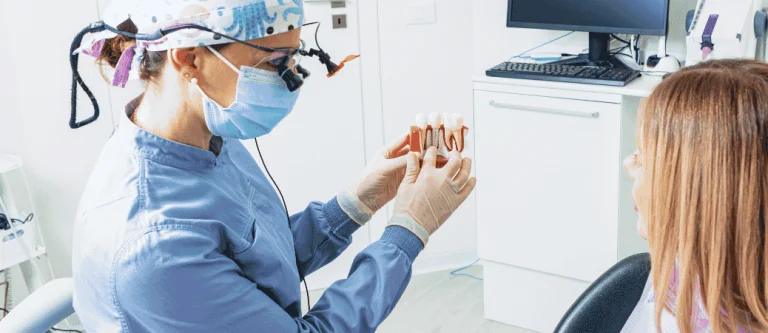

Do I need a bone graft for a dental implant? This is a common concern if you have been missing teeth for years or have experienced jawbone loss.
A bone graft may be needed when there is not enough healthy bone to support an implant, but not everyone requires one.
Your dentist can evaluate the area using an examination and 3D imaging to determine whether grafting is necessary.
An implant is a small post that stands in for a tooth root. Your jawbone has to grow around it and hold it firmly, which dentists call implant stability.
When bone is too thin, too short, or too soft, the implant has less to grip. Bone grafting rebuilds that support first, so the implant has a steady base.
At Harmony Dentistry, we hear this question often from patients who were caught off guard by the word “graft.” It is a fair thing to worry about, since it can add time and another healing step.
The signs below help you know what to watch for and what to ask at your visit.
Key Takeaways
- Everyday signs like a long-empty gap or loose dentures raise the question, but imaging answers it.
- Grafts range from a small fill at extraction to a sinus lift, matched to how much bone is missing.
- Healing time before your implant depends on the graft and on you, so plan for flexibility.
What Signs Suggest You May Need a Bone Graft?
The strongest clues are time, disease, and visible change. A tooth that has been gone a long while, a history of gum disease or jaw trauma, dentures that keep slipping, and a gum area that looks dipped or narrow all point toward bone loss. Each one tells your dentist where to look closer.
Has a Tooth Been Missing for Months or Years?
Tooth loss is the most common reason bone shrinks. A tooth root presses on the bone every time you chew, and that pressure keeps the bone active.
Once the root is gone, the bone in that spot starts to break down.
The early months matter most. Jawbone loss can begin soon after tooth extraction, with significant changes occurring during the first several months.
The amount of bone loss varies depending on the extraction site, bone condition, and individual healing.
What your dentist looks for: how wide the ridge feels, how tall it is on imaging, and how close it sits to the sinus or nerve.
If you are weighing dental implants after years of missing teeth, this is the first thing the exam will sort out. You can also read more about missing teeth and jawbone loss and why it happens.
Have You Had Gum Disease or a Jaw Injury?
Gum disease, also called periodontal disease, attacks the bone that holds your teeth. You may remember bleeding gums, deep pockets, or teeth that felt loose before they were removed.
That bone damage stays behind after the tooth is gone.
A jaw injury from a fall, sports hit, or car accident can leave thin or uneven bone too. Sometimes the damage only shows up on a scan, years later.
What your dentist looks for:
- Gum health today. Active infection gets treated before any graft or implant.
- Pocket depth and bone levels around nearby teeth.
- Defects or uneven edges in the bone where trauma happened.
Are Your Dentures Loose or Your Jawline Changing?
Loose dentures are often a sign that the bone under them has flattened. A denture rests on the gums and does not stimulate the bone below, so the ridge slowly wears down.
That is why a denture that fit well five years ago may rock or slip now.
You may also notice changes in your face. Cheeks can look more sunken, lips may fold in, and the space between your nose and chin can look shorter. These changes happen as bone shrinks beneath the skin.
What your dentist looks for: the shape of the whole arch, not just one spot. If you are thinking about implant dentures, the plan depends on where enough bone remains.
Does the Implant Site Look Narrow or Sunken?
You can sometimes see bone loss in the mirror. The gum over the gap may look flatter, thinner, or dipped compared with the teeth beside it. Some people notice food catching in a hollow spot.
This sign is useful but limited. Gums can look full while the bone beneath is thin, and a dip can be mostly soft tissue. Your dentist will feel the ridge, measure it, and then confirm with imaging.
How Does Your Dentist Confirm Whether Grafting Is Necessary?
At Harmony Dentistry, Dr. Jessica Barton brings experience from placing more than 1,000 dental implants and teaching implant dentistry to other clinicians.
An implant evaluation helps determine whether your jawbone can support an implant or whether grafting may be needed.
Clinical examination and 3D imaging can help assess bone dimensions and nearby structures before treatment planning.

What Can a CBCT Scan Show About the Implant Site?
A CBCT scan (short for cone beam computed tomography) takes a 3D picture of your jaw in a few seconds while you sit or stand still. Your dentist can then view the site from the front, the side, and the top.
From a cone beam CT, your dentist can see:
- Bone height, measured in millimeters from the gum line down
- Bone width, which flat X-rays miss
- Bone density, or how solid the bone looks
- The sinus floor above your upper back teeth
- The nerve canal that runs through your lower jaw
If the scan shows insufficient bone volume, your dentist can test virtual implant positions on screen and see how much bone a graft would need to add.
There is no single number that applies to every person. The right amount depends on the implant size, the location, and the tooth it replaces.
In one German clinical review of 279 grafting patients, a 3D CT scan was needed in 30.8% of cases because flat X-rays and the exam could not fully show the ridge. In many offices today, a CBCT is part of routine planning. Bring your questions to your visit; our dental implant consultation checklist can help.
When Can an Implant Be Placed Without a Graft?
You can skip a graft when the scan shows enough healthy bone in the right spot. That happens more than people expect, especially when a tooth is removed before much bone has been lost.
A few common no-graft or reduced-graft paths:
- Immediate placement. If the socket walls are still intact, the implant sometimes goes in the same day the tooth comes out.
- A different implant size or angle. A shorter or narrower implant may fit the bone you have.
- Angled full-arch designs. All-on-4 dental implants tilt back implants into the stronger bone, which can avoid a sinus lift for some people.
Your implant dentist determines whether grafting is necessary by evaluating the available bone, implant position, and expected stability.
Good early grip supports osseointegration, the process where bone grows onto the implant surface over a few months.
Which Grafting Approach Fits the Bone Loss?
The type of graft follows the size and location of the bone loss. A fresh socket may need a simple fill, a thinned ridge may need building out, and an upper back jaw near the sinus may need a sinus lift. The material is chosen to match.
Can Socket Preservation Help at the Time of Extraction?
Yes. Socket preservation means placing graft material in the empty socket right after a tooth is removed. It helps hold the ridge shape while the site heals, so you are less likely to need a bigger graft later.
Socket preservation is generally a localized grafting procedure performed after extraction. Recovery depends on the condition of the site, the graft material, and individual healing.
When Are Ridge Augmentation or a Sinus Lift Used?
Ridge augmentation rebuilds a jaw ridge that has become too thin or too short. Graft material goes along the ridge, and a thin barrier called a membrane often covers it so bone can fill in without gum tissue crowding the space.
Sometimes the implant goes in at the same visit; larger defects heal first.
A sinus lift adds bone height in the upper back jaw. The sinus sits just above the roots of your upper molars, and after those teeth are lost, the bone below it can thin out.
The surgeon gently raises the sinus lining and places graft material underneath. In the German study above, augmentation was indicated when less than 5 mm of bone remained below the sinus, though your dentist will judge your own site individually.
You can learn more about our sinus lifts and bone grafting care. Bigger cases may be part of full mouth reconstruction.
What Materials Can a Dental Bone Graft Contain?
Graft material acts as a frame your own bone grows into. Over time, bone regeneration replaces much of it with living bone. There are four main types:
| Material | Where it comes from | Key point |
| Autograft | Your own bone, often from the jaw | Brings living cells; needs a second site |
| Allograft | Screened human donor bone | No second surgery site |
| Xenograft | Processed animal bone, often bovine | Holds shape well over time |
| Alloplast | Synthetic minerals | Made in a lab; no tissue donor |
Your own bone has a long track record, with success rates above 95% reported even in severely shrunken jaws. Donor and synthetic options spare you a second surgical spot.
A review of graft materials notes that the shape of the defect is one of the most important factors in choosing a technique, which is why your scan guides the choice.
What Happens Before You Can Get Your Implant?
Before your implant, the graft needs time to heal and turn into solid bone. The bone grafting procedure itself is usually done with local numbing, followed by a recovery period and then a check to confirm the site is ready.

What Is Bone Graft Recovery Like?
Most people describe bone graft recovery as similar to a tooth extraction. Expect some swelling, soreness, and a little bleeding for the first few days.
Practical tips that help:
- Use ice on your cheek in short sessions the first day.
- Eat soft, cool foods and chew on the other side.
- Take pain medicine as your dentist directs.
- Skip smoking, since it slows healing.
- After a sinus lift, avoid blowing your nose hard and sneeze with your mouth open.
Small grains of graft material in your mouth during the first week are common. Call your dentist if swelling gets worse after day three, or if you notice pus, fever, or pain that keeps climbing.
How Does Healing Affect the Implant Surgery Timeline?
Healing time shapes when your implant surgery can happen. A small socket graft heals faster than a large ridge build-up or sinus lift. Your age, health, smoking, and the graft material all play a part.
In the German study, implants went in 3 to 5 months after block grafts, but your timeline may be shorter or longer. Your dentist will check the site with an exam and often a new scan before placing the implant.
Waiting until the bone is ready supports long-term dental implant success. A bone graft before implants is one step in the process, and some cases add only a few months.
Let an Implant Evaluation Guide Your Next Step

Your best next step is an implant evaluation with 3D imaging, because the signs you notice at home only raise the question.
A gap that has been empty for years, past gum disease, an old injury, or loose dentures all make bone loss more likely. Still, plenty of people with those histories have enough bone, and some sites need nothing extra.
During your implant consultation, the evaluation may include:
- A review of your dental and medical history
- An examination of your gums and jawbone
- Diagnostic imaging, including CBCT when appropriate
- A personalized treatment plan explaining whether grafting is needed
From there, you can compare options such as single tooth dental implants or full-arch care. Ask your dentist to show you the scan and point to where the bone is thin. Seeing it yourself makes the plan easier to trust.
Frequently Asked Questions
Can I get a dental implant without a bone graft?
Yes, if your scan shows enough bone height, width, and density at the implant site. Many people qualify, especially when the tooth was removed recently. A different implant size or angle can also help some people avoid a graft.
How long after a bone graft can I get an implant?
It varies with the graft size and your healing. Small socket grafts tend to heal sooner than ridge augmentation or a sinus lift, which can take several months. Your dentist confirms readiness with an exam and imaging before scheduling.
Can a bone graft be done when my tooth is extracted?
Yes, this is called socket preservation. Graft material is placed in the socket at the same visit to help keep the ridge from shrinking. It can reduce the chance of needing a larger graft later.
What are the signs that a dental bone graft has failed?
Warning signs include swelling or pain that gets worse after the first few days, pus, a bad taste, or a lot of graft material coming out.
Gum tissue pulling back to show the graft or membrane is another concern. Call your dentist promptly if you notice any of these.
How much does a bone graft before implants cost?
The cost of bone grafting depends on the amount of bone loss, the grafting technique, the materials used, and whether additional procedures are necessary.
Harmony Dentistry can provide a treatment-specific estimate after evaluating your needs. Patients can also explore available dental insurance benefits, the Harmony Smiles Membership Plan, and financing options, subject to eligibility and applicable terms.