

Dentures that slip and slide are more than annoying. They can make it hard to eat, talk, and smile without worry.
The good news is that loose dentures almost always have a fix, whether that means a simple adjustment, a fresh reline, or a switch to implant-supported options.
You don’t have to just live with dentures that won’t stay put. Once you understand why they came loose in the first place, you can pick the solution that fits your life and your budget.
This guide walks you through what’s happening in your mouth, what you can try at home, and when it’s time to call your dentist.
You’ll also learn about long-term options that keep your smile secure for years to come.
Key Takeaways
- Loose dentures are a common problem, but you have several ways to fix them.
- Your jawbone and gums change over time, which is often why a good fit doesn’t last forever.
- Simple habits, professional adjustments, and implant support can all help you feel more confident in your smile.
Table of Content
- What to Do Right Away When Dentures Shift
- Why a Once-Good Fit Can Change
- Signs That Call for a Dental Visit
- Professional Ways to Restore Comfort and Retention
- Longer-Term Stability With Implant Support
- Daily Habits That Help Dentures Stay Comfortable
- Frequently Asked Questions
What to Do Right Away When Dentures Shift
If your dentures start moving around, there are a few simple steps you can take right now to feel more comfortable.
These include cleaning and resetting your dentures, using a bit of adhesive, sticking to soft foods for a while, and calling your dentist instead of trying to fix things yourself.
Reseat and Clean the Dentures
Take your dentures out and rinse them off first. Small food particles or trapped saliva can get between your gums and the denture base, which throws off the denture suction that keeps them in place.
Once they’re clean, rinse your mouth too. Then put your dentures back in slowly and press down gently to reseat them properly.
Good denture care habits, like cleaning your dentures every day, can help prevent this shifting from happening as often. If they still feel loose after cleaning and reseating, that’s a sign something else might be going on.
Use Denture Adhesive as a Short-Term Aid
A denture adhesive can help hold things steady while you figure out a longer-term fix. These products come as creams, powders, or strips, so you can pick whichever feels most comfortable for you.
Apply a thin, even layer following the directions on the package. More isn’t better here, so avoid piling it on.
Adhesive is meant to be a temporary helper, not a permanent solution. If you find yourself needing more and more just to get through the day, that’s your cue to see your dentist soon.
Choose Softer Foods and Chew Evenly
While you’re dealing with a loose fit, give your mouth a break by eating softer meals for a few days. Think scrambled eggs, mashed potatoes, soup, or yogurt.
Chewing tough or sticky foods can pull dentures out of place, especially if they’re already unstable.
Try to chew evenly on both sides of your mouth instead of favoring one side.
This spreads out the pressure and helps keep your dentures balanced. Once your fit feels more secure again, you can slowly bring back firmer foods.
Avoid DIY Repairs and Excess Adhesive
It might be tempting to fix a crack or gap yourself with household glue, but this can damage your dentures beyond repair.
Store-bought glues aren’t made for the inside of your mouth and can actually be harmful if swallowed.
Piling on extra adhesive to mask a bad fit isn’t a real fix either. Poorly fitting dentures usually point to changes in your gums or jawbone that adhesive alone can’t solve.
If your dentures keep slipping no matter what you try, it’s time to call your dentist. They can look at what’s really causing the problem and recommend the right next step for you.
Why a Once-Good Fit Can Change
Your mouth keeps changing even after you get your dentures, and that’s the main reason a fit that once felt perfect can start to feel loose.
Your jawbone, gums, and even the dentures themselves shift over time, and each of these changes can affect how secure your bite feels.
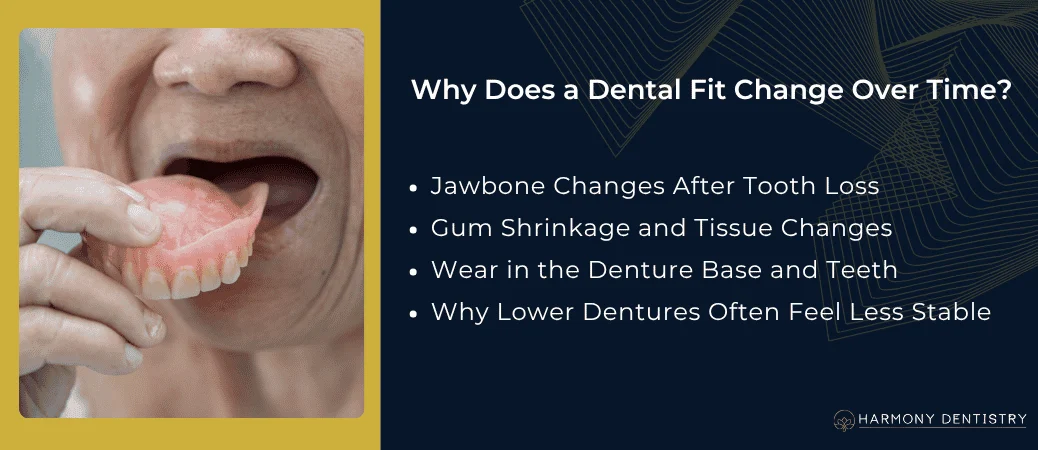
Jawbone Changes After Tooth Loss
When you lose your natural teeth, your jawbone starts to change shape. Your tooth roots used to send signals to your jawbone that kept it strong and full.
Without those roots, your body slowly reabsorbs the bone in a process called bone resorption. This happens gradually, but it adds up over months and years.
As your jawbone shrinks, the ridge that once held your dentures in place becomes smaller and flatter. This makes it harder for your dentures to grip like they used to.
You might not notice this happening day to day, but it’s often the biggest reason dentures become loose over time.
Gum Shrinkage and Tissue Changes
Your gums change shape right along with your jawbone. As your bone shrinks, the soft tissue on top follows the same pattern.
This gum shrinkage means the surface your dentures rest on keeps changing shape.
Your dentures were made to match your mouth at one point in time, so as your gums shrink, that match becomes less exact.
You may also notice your gums feel more tender or sensitive in certain spots. This can happen because your dentures no longer sit evenly across your gum tissue.
Even small changes in your gums can affect your denture fit, especially if you notice pressure spots or areas that feel sore after wearing them for a while.
Wear in the Denture Base and Teeth
Your dentures go through daily wear just like natural teeth do. The denture base, which is the part that touches your gums, can wear down slightly over time from use and cleaning.
The teeth on your dentures can also flatten with repeated chewing. This changes your bite and can make your dentures feel less stable, even if your gums haven’t changed much.
Here are common signs of wear you might notice:
- Flat or worn-down chewing surfaces
- Rough or thin spots on the denture base
- Teeth that don’t line up like they used to
- A looser feel even after a reline
Regular check-ups help you catch these changes early, before they cause bigger fit problems.
Why Lower Dentures Often Feel Less Stable
You may have noticed your lower dentures feel less secure than your upper ones. This is common and has to do with how your mouth is built.
Your lower jaw has less surface area for a denture to rest on compared to your upper jaw.
There’s also no suction effect like there is on the roof of your mouth, which helps upper dentures stay in place.
Your tongue and cheek muscles move constantly, which can shift a lower denture during talking or eating.
Combined with jawbone changes from missing teeth, this makes lower dentures more likely to slip.
Signs That Call for a Dental Visit
Some denture problems are minor and pass on their own. Others are signs that you need to see a dentist soon, before they turn into bigger problems for your mouth.
Sore Spots, Rubbing, and Gum Irritation
If you notice sore spots on your gums, don’t just push through it. These spots often mean your dentures are rubbing against your gums in the same place over and over.
A little redness might go away on its own. But if the same area keeps getting irritated, or if you see a sore that won’t heal, call your dentist.
Ill-fitting dentures can cause ulcers or open sores if you keep wearing them without help. This can hurt your oral health over time, so it’s best to get checked early rather than wait.
Clicking, Slipping, or Trouble Speaking
Do your dentures click when you talk or chew? This is often a sign they’re loose or not sitting right anymore.
You might also notice your dentures slip when you laugh, cough, or open your mouth wide. Some people find certain words are harder to say clearly because their tongue has to work extra hard to keep the dentures in place.
These are all signs of poorly fitting dentures. A dentist can check your bite and the fit of your denture to figure out what’s changed and what needs to be fixed.
Difficulty Eating or Keeping Food Out
Eating should feel easy, not like a struggle. If you find yourself avoiding foods like apples, salads, or meat because chewing feels hard or your denture won’t stay put, that’s a signal something’s wrong.
You might also notice food getting stuck under your denture more than it used to. This can be uncomfortable and even affect your breath.
If you’re only chewing on one side of your mouth, or cutting everything into tiny pieces to manage, don’t just adjust your habits.
Bring this up with your dentist so they can look at what’s causing the problem.
When New Dentures Need Adjustment
Even brand new dentures sometimes need a few tweaks. Your mouth needs time to adjust, and your dentist may need to smooth or shape the denture slightly to fit your gums better.
But if new dentures feel very loose, painful, or just don’t sit right after a few weeks, that’s not something to just live with. Fitting dentures correctly can take more than one visit, and that’s normal.
Don’t try to file or adjust them at home. Go back to your dentist so they can make the right changes safely.
Professional Ways to Restore Comfort and Retention
If your dentures feel off, there are several ways to improve their fit, from small adjustments to a full replacement. The right option depends on what is causing the looseness and how much your mouth has changed.
At Harmony Dentistry, Dr. Anna Hinds takes the time to understand your concerns and find an approach that fits your needs and goals.

Minor Adjustments for Pressure Points
Sometimes your dentures just need small tweaks, not a big fix. If certain spots rub or pinch, your dentist can smooth or reshape the denture base in those areas.
This process is quick and usually painless. You sit in the chair while your dentist checks for sore spots, then trims away small amounts of material.
Common signs you need an adjustment:
- Sore spots on your gums
- Red or irritated patches inside your mouth
- Pain when you bite down in one spot
- A denture that rocks slightly when you talk
These visits are often short. Many patients feel relief right after leaving the office.
Denture Reline Options
A denture reline adds new material to the base of your denture so it fits your gums again.
Over time, your jawbone changes shape, and your denture can start to feel loose because of it. A reline fixes this without replacing the whole denture.
There are two main types you should know about:
| Type | Best For | How Long It Lasts |
| Soft reline | Sensitive gums or short-term comfort | A few months to a year |
| Hard reline | Long-term fit and stability | Several years |
A soft reline uses a cushioned material that feels gentle against your gums. A hard reline uses a firmer material that holds its shape longer.
Your dentist will help you pick the best relining option based on your comfort needs and how much your gums have changed.
When a Replacement Denture Is Needed
Sometimes a reline isn’t enough. If your jawbone has changed a lot, or your denture base has worn down or cracked, a new denture may be your best option.
Signs you might need a replacement:
- Your denture doesn’t sit right even after a reline
- The teeth on your denture look worn flat
- The base has visible cracks or thin spots
- Your bite feels uneven no matter how you adjust
New dentures are custom-made using fresh impressions of your mouth. This means a better overall fit and improved denture stability compared to trying to patch up an old set that no longer matches your gum shape.
How Proper Fit Supports Daily Function
A well-fitted denture changes how you eat, talk, and feel throughout the day. When your denture fits snugly, you can chew food more evenly without worrying about it shifting.
Good fit also protects your gums. Loose dentures rub against soft tissue, which can cause sores or irritation over time. A dentist checks your fit regularly to catch small problems before they turn into bigger ones.
Speaking clearly also depends on denture fit. A denture that moves around can affect how words come out, making you feel less confident in conversations.
Regular checkups help keep your denture fit working the way it should, so you can go about your day without constant adjustments or discomfort.
Longer-Term Stability With Implant Support
If your dentures keep slipping no matter what you try, dental implants may give you the lasting fix you’re looking for.
Implants attach directly to your jawbone, which means your denture gets a stronger, more stable base to rest on.


How Dental Implants Support Dentures
Dental implants are small titanium posts that a dentist places into your jawbone. Over a few months, your bone fuses to the implant in a process called osseointegration.
This creates a strong anchor point, similar to how a natural tooth root works.
Once the implants heal, they act as attachment points for your denture. Your denture can snap onto these implants, so it stays firmly in place. You won’t need to worry about it shifting when you eat, laugh, or talk.
This setup also helps slow down bone loss in your jaw, since the implants stimulate the bone the way natural tooth roots once did.
Implant-Supported Dentures and Overdentures
Implant-supported dentures, also called overdentures, are dentures that attach to implants instead of resting loosely on your gums.
Your dentist can design your overdenture to snap onto 2 to 4 implants, depending on your needs and how much bone support you have.
You can remove an implant overdenture for cleaning, just like a regular denture. But because it locks onto implants, it feels much more secure when you’re wearing it.
Many people find that an implant overdenture improves both stability and comfort compared to traditional dentures. You may also notice it’s easier to chew a wider variety of foods.
Who May Need Additional Bone Evaluation
Not everyone has enough jawbone to support implants right away. Bone resorption, which happens naturally after you lose teeth, can leave your jaw too thin or too short for standard implants.
Your dentist may recommend a bone scan or CT scan to check your jawbone’s height and width. If you’ve worn dentures for many years, you’re more likely to have noticeable bone loss.
In some cases, you might need bone grafting before implants can be placed. Other times, your dentist may suggest mini dental implants, which are narrower and can sometimes be used even with less bone.
A thorough evaluation helps you understand your options before moving forward.
Comparing Convenience, Maintenance, and Cost
Implant-supported dentures cost more upfront than traditional dentures, but they often last longer and require fewer adjustments over time. Here’s a quick comparison to help you weigh your options:
| Option | Convenience | Maintenance | Typical Cost |
| Traditional dentures | Removable, easy to clean | Relines every 1-2 years | $1,000-$5,000 per arch |
| Mini implant overdenture | Removable, snaps in place | Denture portion may need replacement | $3,000-$8,000 per arch |
| Standard implant overdenture | Removable, very stable | Implants can last 20+ years | $5,000-$15,000 per arch |
Your best choice depends on your budget, your bone health, and how much stability you want day to day.
Daily Habits That Help Dentures Stay Comfortable
Small habits make a big difference in how your dentures fit and feel each day. Cleaning, hydration, proper storage at night, and regular checkups all work together to help you avoid slipping and discomfort.
Clean Dentures and Gums Every Day
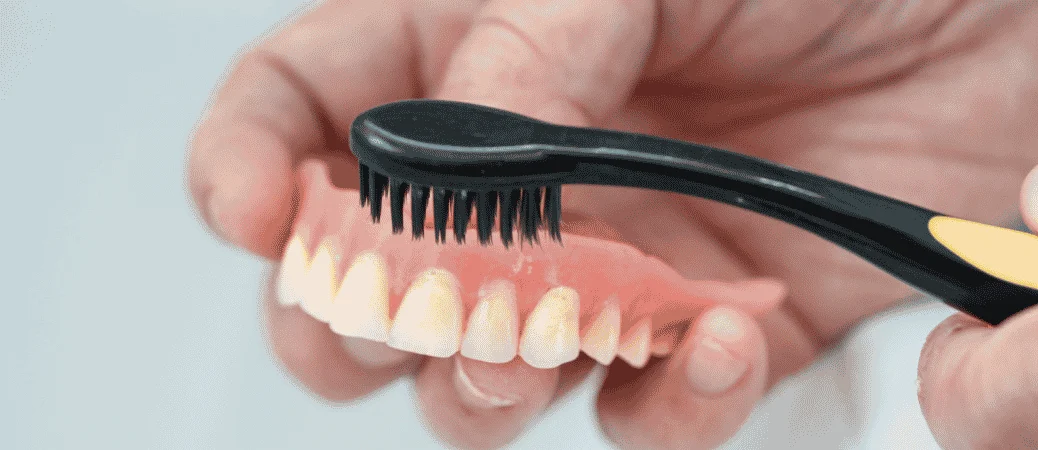
Keeping your dentures clean is one of the easiest ways to improve your denture fit. Food particles and plaque can build up under the base, which breaks the seal that helps hold your dentures in place.
Brush your dentures every day with a soft brush and a cleanser made for dentures. Avoid regular toothpaste, since it can be too rough on the surface.
Don’t forget your gums, tongue, and the roof of your mouth. Wipe them gently with a soft cloth or brush to remove bacteria.
Good denture care also supports your oral health, lowering your risk of gum irritation and bad breath.
Remove Dentures as Directed at Night
Taking your dentures out at night gives your gums a chance to rest. Wearing them all day and night can put constant pressure on your gum tissue, which may lead to soreness or faster bone changes.
At night, soak your dentures in water or a denture-cleaning solution. This keeps the acrylic from drying out and losing its shape.
Always follow your dentist’s specific instructions, since some removable options may have different care needs.
If you’re unsure how long to leave your dentures out, ask your dental office for guidance made for your situation.
Stay Hydrated to Support Natural Suction
Saliva plays a bigger role in denture retention than most people realize. A thin layer of saliva helps create denture suction between the denture base and your gums, which keeps things steady while you eat or talk.
Drinking water throughout the day helps your mouth stay moist enough to support that seal.
Dry mouth, which is common in some denture wearers, can weaken this natural grip and lead to more slipping.
If your mouth feels dry often, mention it to your dentist. There may be simple ways to manage it, so your dentures stay more secure without needing extra products.
Schedule Regular Fit Checks
Your jawbone and gums change over time, even after you get used to wearing dentures. These changes can cause your dentures to feel loose, even if they fit well at first.
Routine visits let your dentist check for shifts in your denture fit and catch small issues before they turn into bigger problems. This might include checking for sore spots, uneven pressure, or early signs of bone loss.
Try to schedule a checkup at least once a year, or sooner if you notice new discomfort. Staying on top of these visits helps you avoid ongoing slipping and keeps your bite feeling steady.
Frequently Asked Questions
Loose dentures raise a lot of questions, from what counts as normal movement to when you need to call your dentist. Here are answers to the most common concerns you might have about keeping your dentures secure.
Is it normal for dentures to move slightly?
A small amount of movement is normal, especially when you first get new dentures. Your mouth muscles and tongue need time to learn how to hold them in place.
But if your dentures shift every time you talk, chew, or laugh, that’s not something you should just accept. Constant movement means your dentures may not fit right anymore.
Why do my dentures keep slipping or moving?
Your jawbone changes shape over time once you lose your natural teeth. This process, called bone resorption, causes your gums to shrink, which leaves less support for your dentures.
Other causes include daily wear and tear, using the wrong denture cleaner, or biting down on hard foods. If you have new dentures, it may just take time for your dentist to make the right adjustments.
How can I keep my lower dentures in place when I eat?
Lower dentures tend to move more than upper ones because they have less suction and surface area to grip. Try eating slowly and chewing on both sides of your mouth at the same time to keep pressure even.
Cutting food into smaller pieces can also help. Soft foods put less strain on your denture and reduce the chance of slipping while you chew.
Can denture adhesive help secure loose dentures?
Yes, denture adhesive can add extra hold and reduce movement throughout the day. Soft liners and adhesives can improve comfort and help ease sore spots on your gums too.
Keep in mind that adhesive is a short-term fix, not a permanent solution. If you find yourself using more and more each day, it’s a sign your dentures need to be checked.
What can I do at home if my dentures feel loose?
Start by cleaning your dentures with lukewarm water instead of hot water, since heat can warp the material. Avoid soaking them for too long in strong cleaning solutions, as this can wear them down faster.
You can also try a denture adhesive for extra grip until you can see your dentist. Sticking to softer foods for a while can lower your risk of irritation or further damage.
When should I see a dentist about loose or painful dentures?
You should book an appointment if your dentures cause sore spots, make it hard to eat or speak, or slip no matter what you try. Pain or bleeding gums are also signs that something needs attention right away.
A dentist can decide if you need a denture reline or a full replacement based on how your mouth has changed. Waiting too long can lead to more discomfort and bigger problems with your gums and jawbone.