When comparing same day crowns vs traditional crowns, the right choice depends on your tooth’s condition, treatment needs, and schedule.
Same-day crowns can offer the convenience of completing treatment in one appointment without a temporary crown, while traditional crowns may provide additional material and customization options.
Both types of dental crowns help protect and restore damaged teeth. Understanding the differences in appointment time, materials, cost, and aftercare can help you make a more informed decision with your dentist.
Which Option Saves You More Time?
You usually save trips with same-day crowns, though you should reserve a longer block of time for treatment. Your total chair time is not necessarily shorter than with a lab-made crown.
One Longer Appointment vs. Two Separate Visits
With same-day crowns, you stay through tooth preparation, scanning, crown making, and placement. Ask for the full appointment length when booking. Milling is only part of your visit; numbing and checking your bite take time too.
With traditional crowns, you usually attend two appointments separated by a lab wait. You repeat the commute and any work or childcare arrangements.
When scheduling with Harmony Dentistry, ask how much time you should reserve for each visit.
| Your scheduling consideration | Same-day crowns | Traditional crowns |
| Planned treatment visits | One longer visit | Usually two visits |
| Temporary crown | Usually unnecessary | Usually needed |
| Crown production | In the office | At a dental lab |
| Time between preparation and placement | Same appointment | Lab waiting period |
| Material choices | Office-dependent ceramics | Ceramics and metal options |
Why Avoiding a Temporary Crown Can Simplify Your Schedule
You skip the interim stage when your permanent crown is placed during the preparation visit. That removes the need to protect a temporary crown during meals or arrange a repair if it loosens.
Temporary crowns serve an important purpose: they cover your prepared tooth while the lab makes the final crown. If yours comes off, contact your dental office promptly for instructions. Avoid household glue or trying to force it back into place.
How Does Each Crown Procedure Work?
Your dental crown procedure begins with evaluating and shaping the tooth in either workflow. The main difference is where your crown is made and when you receive it.
Same-Day Treatment: Tooth Preparation, Digital Scanning, and Milling
After numbing your tooth, your dentist removes decay and shapes it to make room for the crown. If you have a broken tooth that needs a crown, your dentist also checks how much healthy structure remains. You might need a buildup to support the restoration.
At Harmony Dentistry, Dr. Alicia Neidlinger emphasizes patient education and the role of dental technology in treatment planning.
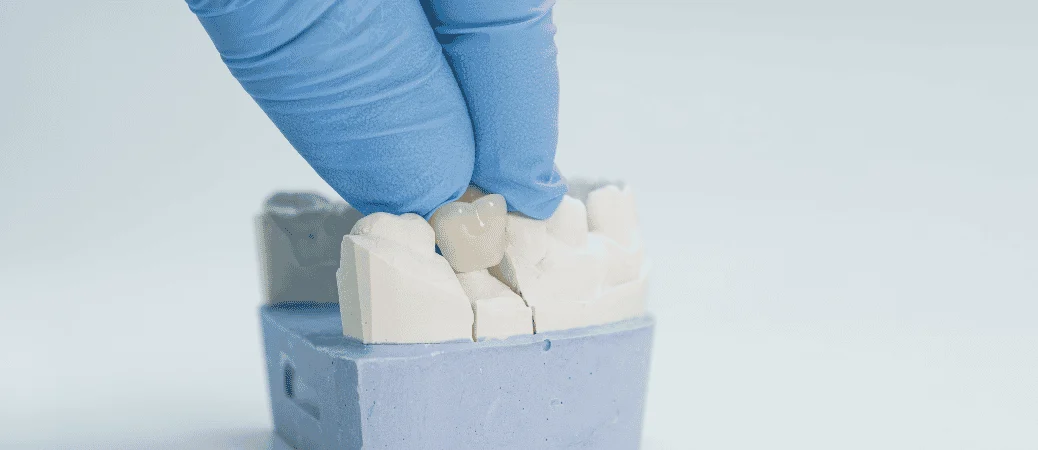
For same-day crowns, a digital scanner captures detailed images of the prepared tooth. CAD/CAM technology allows the dentist to design the restoration, which is then milled from a suitable ceramic block and finished before placement.
CEREC is a digital dentistry system that allows dentists to design and manufacture ceramic restorations in the office. Before bonding or cementing the crown, your dentist checks its fit, appearance, and bite.
Traditional Treatment: Impressions, Lab Fabrication, and Placement
Your traditional crown procedure starts with similar tooth preparation. Your dentist takes either a physical impression or a digital scan, sends the information to a lab, and places a temporary crown.
You return once the lab finishes your permanent crown. Your dentist removes the temporary, checks the new crown, and secures it after any adjustments.
You also benefit from digital tools in a lab workflow. Lab-made CAD/CAM crowns use computer-based design and manufacturing, so receiving a traditional crown does not automatically mean having putty impressions.
Are Same-Day Crowns as Durable and Natural-Looking?
You can receive a durable, natural-looking crown through either approach when the material and design suit your tooth. Your dentist should assess chewing forces and appearance before recommending a fabrication method.

How Ceramic, Zirconia, and Metal Options Compare
Your choices for CEREC crowns depend on the office’s equipment and available materials. You might receive lithium disilicate, a glass ceramic valued for its toothlike appearance, or zirconia, a strong ceramic used for demanding chewing areas.
When planning your restorative dentistry, ask which specific material your dentist recommends and why. Your main options include:
- Ceramic crowns: You get a tooth-colored restoration, with appearance and strength varying by ceramic type.
- Zirconia crowns: You get a high-strength option available through both chairside and lab workflows.
- Porcelain-fused-to-metal crowns: You get a metal base covered with porcelain; a metal edge sometimes shows near the gum.
- Metal crowns, including gold crowns: You get a metallic restoration with strong resistance to fracture.
With all-ceramic crowns, you avoid a metal core. Your dentist still needs to choose the right ceramic for your tooth’s location and bite.
Why Material, Fit, and Bite Matter More Than Speed
You should judge a crown by its fit, material, and response to your bite. Your dentist also needs enough sound tooth structure to support it.
Both digital and conventional crown workflows can produce well-fitting restorations. The quality of the fit depends on factors such as tooth preparation, impression accuracy, crown fabrication, and placement.
Your long-term result also requires ongoing care. Chairside CAD/CAM restorations can provide reliable results when the material, design, and fabrication method are appropriate for the tooth being treated.
When Lab Customization Can Improve Appearance
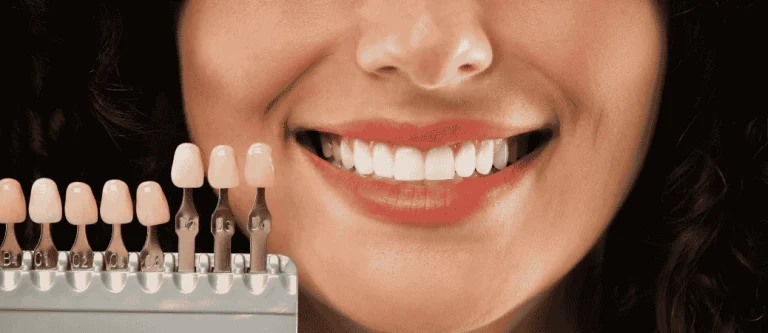
You might prefer lab customization when matching a highly visible front tooth. A technician has room to adjust porcelain layers, surface texture, and subtle color changes to blend with neighboring teeth.
Your same-day crown also receives shade selection and finishing. If your treatment includes cosmetic dentistry, discuss your expectations before tooth preparation and ask how the proposed material will match your smile.
How Do Costs and Insurance Compare?
You need written estimates for both options to compare your actual costs. Your same-day crown cost reflects the material, location, included treatment, and insurance benefits.
What Determines Your Out-of-Pocket Crown Cost?
Your estimate should identify the crown fee and any additional treatment that may be necessary.
Procedures such as a tooth buildup, root canal treatment, or gum treatment can affect the overall cost, depending on your treatment needs and insurance benefits.
Ask about these details before approving treatment:
- Your deductible and remaining annual benefit.
- Whether your dentist is in network.
- Any waiting period or crown replacement restriction.
- Whether your plan limits payment based on a different material.
- Which scans, temporary restorations, and adjustments are included.
Harmony Dentistry can help you review available insurance and financing options before treatment. Any estimated insurance benefits are subject to your plan’s terms and final claim determination.
How to Factor in Time off Work and Additional Visits
You should include practical expenses alongside the dental fee. Compare lost wages, transportation, and care arrangements for each appointment.
Same-day dental crowns reduce scheduled return trips for crown placement. Traditional dental crowns spread treatment across separate visits, which might fit your workday better if a longer appointment is difficult to arrange. Leave room for an adjustment visit with either approach.
When Is Each Option the Better Fit?
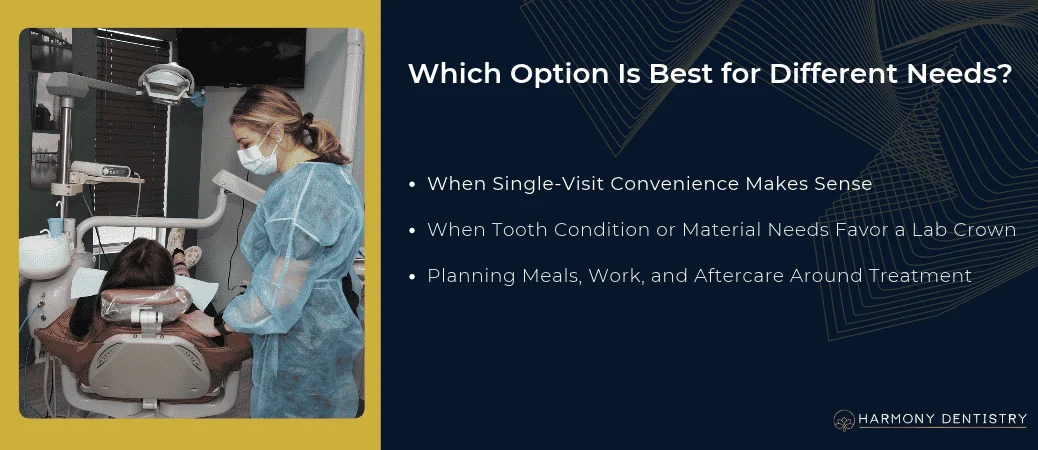
Your crown treatment should follow the needs of your tooth before you commit to a schedule. Single-visit convenience works best when your dentist expects to complete the required care safely that day.
When Single-Visit Convenience Makes Sense
Same-day crowns may be appropriate when the tooth can be restored in a single appointment and a suitable crown material is available.
Your dentist will also consider the remaining tooth structure, bite, gum health, and restorative needs before recommending this approach.
You also avoid managing a temporary restoration between visits. If you are coordinating crowns with a smile makeover, confirm the full treatment sequence before reserving a single day for completion.
When Tooth Condition or Material Needs Favor a Lab Crown
You might need traditional crowns when your treatment calls for cast metal or detailed porcelain layering. Extensive damage or a margin deep below the gum also requires careful planning.
Your dentist first needs to determine whether the tooth is ready to be restored. If infection is present, your discussion about root canal treatment vs. tooth extraction comes before choosing a crown workflow.
A lab crown alone does not resolve an unhealthy tooth or gum problem. Ask which preliminary treatments are needed and how they change your schedule.
Planning Meals, Work, and Aftercare Around Treatment
Follow your dental team’s instructions about eating before and after your appointment, particularly if sedation is planned.
After treatment, wait until the numbness wears off before chewing and follow any additional instructions related to the crown’s bonding or cementing material.
If you have a temporary crown, avoid sticky foods and hard chewing on that side. With either type, contact your dentist if your bite feels high or pain worsens.
Keep up brushing and cleaning between your teeth. Your routine general dentistry visits allow your dentist to check the crown’s edge and the supporting tooth.
Choose Convenience That Fits Your Tooth’s Needs

You get the most useful convenience when your crown suits both your tooth and your schedule. Same-day dental crowns reduce trips and remove the temporary stage; traditional dental crowns provide additional material and customization options.
When discussing your choice with Harmony Dentistry, ask for the recommended material, appointment length, and written out-of-pocket estimate.
Confirm what you should expect after treatment and whom to contact if your bite needs an adjustment.
Frequently Asked Questions
You should confirm appointment timing and recovery instructions before booking either crown option. These answers help you plan for common scheduling concerns.
Can I get a same-day crown during my lunch break?
You should reserve a dedicated appointment block for a same-day crown. Treatment often takes a few hours, and your office should confirm the expected time before you arrange work around it.
What are the disadvantages of CEREC crowns?
Your main trade-offs with CEREC crowns are a longer single appointment and material choices limited by the office’s system. You might benefit from a lab crown if you need cast metal or highly detailed front-tooth shading.
How long do same-day crowns last?
A well-designed and properly fitted same-day crown can last for many years with appropriate care. Its lifespan depends on the crown material, oral hygiene, chewing forces, and the health of the supporting tooth.
Are same-day crowns more expensive than lab crowns?
The cost of same-day and traditional crowns varies depending on the practice, crown material, and any additional treatment required. Request personalized estimates for both options to understand the total cost and potential insurance benefits.
Can I return to work immediately after getting a crown?
You can often return to desk work after crown treatment with local anesthesia alone. Allow for numbness and tenderness, and follow separate driving and activity restrictions if you receive sedation.