A chipped front tooth has a way of showing up in every photo and every mirror check for weeks. It’s a small piece of enamel, but it can feel like a big deal when it’s front and center in your smile.
Veneers for chipped teeth can restore the shape and appearance of a damaged front tooth, but they are not the right choice for every chip.
A proper exam can determine whether a veneer or another treatment better fits the damage.
The right repair for a chipped tooth depends on how deep the damage goes, whether the nerve or dentine layer is exposed, and what caused the chip in the first place.
A surface-level chip on a front tooth is a very different situation than a chip caused by nightly teeth grinding or a tooth that’s already cracked below the gumline.
Getting this distinction right before you commit to a veneer protects both your smile and your budget.
Key Takeaways
- Veneers work well for small to moderate cosmetic chips on healthy front teeth, but deeper fractures or nerve exposure need other treatment first.
- Dental bonding, crowns, root canal therapy, or implants may be the more appropriate (and sometimes more conservative) fix, depending on what your dentist finds during an exam.
- Porcelain and composite veneers differ in cost, lifespan, and repairability, and the right material depends on your budget, bite, and how long you want the result to last.
Table of Content
- Can a Veneer Repair a Chipped Tooth?
- When Is a Veneer the Right Choice?
- Porcelain vs. Composite Veneers for a Chip
- What to Expect From Treatment, Cost, and Aftercare
- Choosing a Repair That Protects Your Natural Tooth
- Frequently Asked Questions
Can a Veneer Repair a Chipped Tooth?
A veneer can restore the look and shape of a chipped tooth when the damage is limited to the enamel, the hard outer layer that protects the tooth.
It works by bonding a thin shell over the front of the tooth, hiding the chip and rebuilding a natural-looking edge.
Porcelain veneers are commonly used to restore teeth that have been chipped, cracked, or slightly broken. That said, a veneer is a cosmetic shell, not a structural rebuild of the whole tooth.
The amount of healthy tooth structure left underneath matters a lot in deciding whether this is the right call.
What a Veneer Covers and What It Cannot Restore
A veneer covers the visible front surface of a tooth and can rebuild a chipped edge or corner so it looks even again.
It does not add strength to a tooth that has lost a large portion of its structure, and it cannot fix problems that start below the enamel, in the dentine or the nerve.
If a chip is small and confined to the enamel, a veneer restores appearance well. If the chip has exposed dentine, the softer, yellowish layer beneath enamel, or if it’s affecting the biting edge under heavy pressure, a veneer alone may not hold up.
When a Chip Is More Than a Cosmetic Problem
Some chips look minor but signal a deeper issue. A tooth that’s sensitive to hot or cold after chipping, or one with a visible dark line running into the gum, may have a crack extending past the enamel.
A broken tooth with pain when biting down often needs a professional exam to rule out nerve involvement before any cosmetic option is considered.
Ignoring this and placing a veneer over a compromised tooth can lead to pain later and veneer damage if the underlying tooth continues to break down.
Why the Cause of the Chip Matters
How the tooth chipped changes the right next step. A one-time accident, like biting into something hard, is different from a chip caused by ongoing teeth grinding at night.
If grinding caused the chip, the same forces will keep working on a veneer once it’s placed, raising the risk of further chips or premature wear.
When Is a Veneer the Right Choice?
A veneer makes sense when the chip is small to moderate, confined to the front tooth’s visible surface, and the tooth is otherwise healthy.
This usually means no active decay, no gum disease, and a bite that does not put excessive pressure on the repaired area.
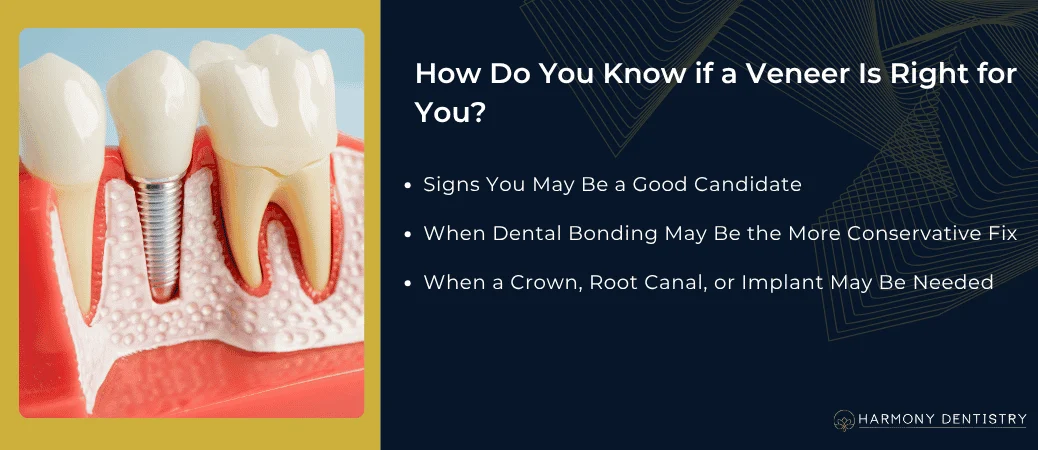
Deciding between a veneer, bonding, a crown, or something more involved always starts with a dental examination.
A cosmetic dentist looks at the size of the chip, the health of the surrounding gum tissue, and how your teeth meet when you bite down before recommending a path forward.
Signs You May Be a Good Candidate
Small to moderate chips that are mostly a cosmetic concern respond well to veneers, especially when the damage doesn’t extend deep into the tooth. Good candidates typically have:
- Enamel-level chips on a front tooth
- Healthy gums with no signs of periodontal disease
- A stable bite without heavy grinding habits
- Enough remaining tooth structure to support a thin shell
When Dental Bonding May Be the More Conservative Fix
Dental bonding is often the better first step for small chips, especially when preserving healthy enamel matters to you.
Bonding uses composite resin applied directly to the tooth and shaped by hand, with little to no enamel removal required.
It’s typically less expensive than a veneer and can be finished in one visit.
A dentist assessing a chipped tooth looks closely at how the upper and lower teeth meet, since heavy contact on a bonded restoration can shorten its lifespan.
In high-bite-force situations, a harder porcelain veneer may actually hold up better despite requiring more preparation.
When a Crown, Root Canal, or Implant May Be Needed
A dental crown, root canal therapy, or dental implant becomes necessary when the chip has damaged a large portion of the tooth or reached the nerve.
Crowns cover the entire tooth rather than just the front surface, which gives more strength to a heavily damaged tooth.
If the nerve is exposed or infected, root canal treatment is needed before any cosmetic covering goes on. When a tooth is broken beyond repair, a dental implant may be the more realistic long-term option.
Restorative dentistry treatments such as root canal treatment, and dental implants are all worth discussing with your dentist if the exam shows structural damage beyond what a veneer can address.


Porcelain vs. Composite Veneers for a Chip
Porcelain veneers cost more and last longer, while composite veneers cost less and are easier to repair chairside if they chip again.
The right material depends on your budget, how long you want the result to last, and how much of your natural enamel you’re comfortable having adjusted.
| Factor | Porcelain Veneers | Composite Veneers |
| Cost per tooth | Generally higher upfront cost | Generally lower upfront cost |
| Typical lifespan | 10 to 20+ years | 5 to 7 years |
| Stain resistance | Excellent | Moderate |
| Appointments needed | 2 to 3 | Often 1 |
| Repairable if chipped | Difficult, usually replaced | Easy, chairside |
Your actual cost depends on your dentist’s fees, your location, and your insurance coverage.
Porcelain Veneers: Appearance, Stain Resistance, and Longevity
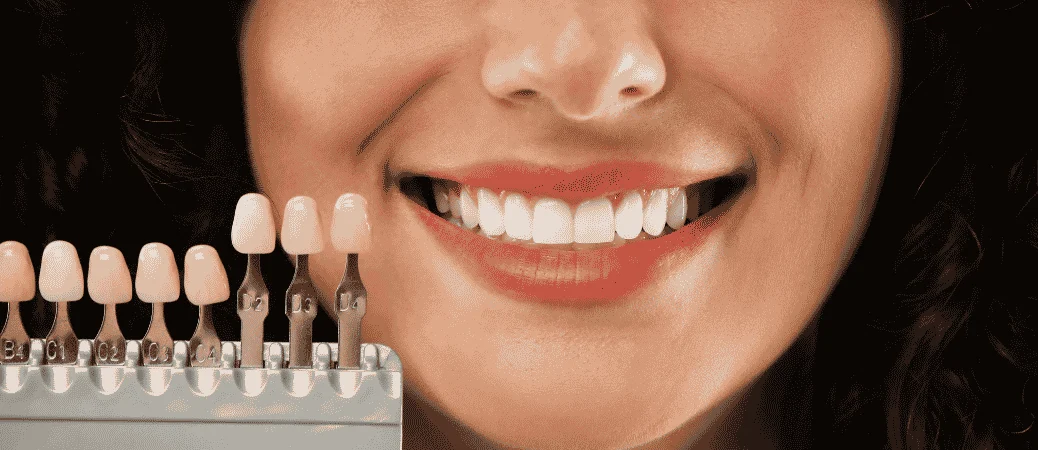
Porcelain veneers are thin ceramic shells, typically 0.5mm to 0.7mm thick, custom-made in a dental laboratory to match the color and shape of your natural teeth.
They resist staining from coffee, wine, and tobacco far better than composite resin, and they can last 10 to 20 years or longer with proper care.
Their translucency mimics how light passes through natural enamel, which is why traditional veneers are often chosen for a smile makeover involving several front teeth.
Composite Veneers: Lower-Upfront Cost and Easier Repairs
Composite veneers are sculpted directly onto the tooth in a single visit, using the same composite resin material used in tooth-colored fillings.
If a composite veneer chips again down the road, your dentist can often repair it chairside without replacing the whole shell.
The tradeoff is a shorter lifespan, generally 5 to 7 years, and a higher chance of staining over time.
How Material Choice Affects Your Long-Term Commitment
Composite veneers are more reversible; porcelain veneers require permanent enamel removal that cannot be undone.
Some patients use composite as a trial run for a new tooth shape before committing to porcelain later on.
Over a 10-year period, composite’s need for replacement can bring its total cost close to porcelain’s upfront price, since one full replacement is often needed around year five to seven.
If you’re planning to keep your repaired tooth looking the same for a decade or more without redoing it, porcelain often ends up being the better value.
What to Expect From Treatment, Cost, and Aftercare
Getting a veneer for a chipped tooth typically takes two to three visits for porcelain, or a single visit for composite, starting with an exam and ending with a bonded, polished tooth.
Cost, timeline, and aftercare all depend on the material you choose and how your bite behaves once the veneer is in place.
How Tooth Preparation and Enamel Removal Work
Tooth preparation for a porcelain veneer involves removing a thin layer of enamel, usually 0.3mm to 0.7mm, from the front of the tooth to make room for the shell.
This step is permanent, which is why your dentist will walk you through the plan carefully before starting.
Composite veneers usually need little to no enamel removal, since the resin is built up on the tooth’s existing surface rather than sunk into it.
Temporary Veneers, Final Bonding, and Recovery
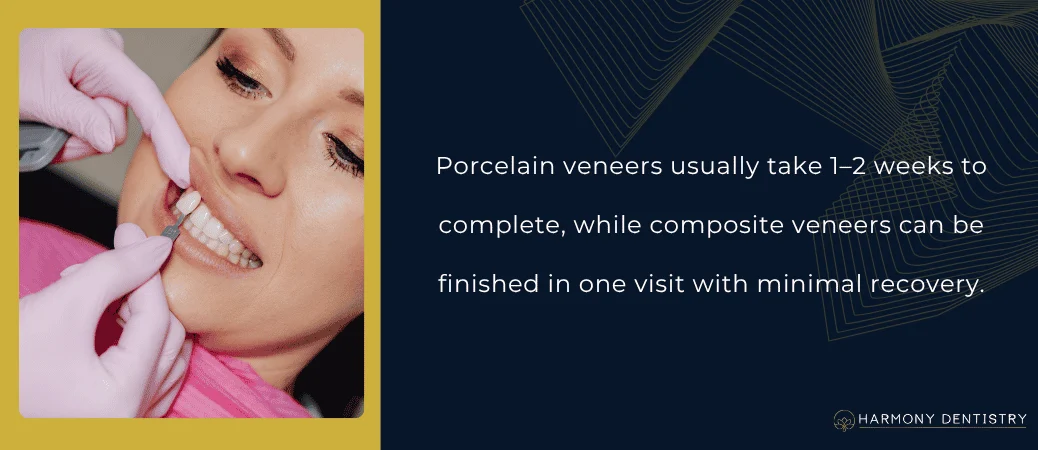
After enamel is prepared for porcelain veneers, a temporary veneer protects the tooth while your permanent one is custom-made in a dental laboratory, a process that generally takes one to two weeks.
Once ready, the permanent veneer is checked for fit and color, then bonded in place with a dental adhesive and hardened under a curing light.
Composite veneers skip the temporary stage entirely, since the resin is shaped, cured, and polished in one appointment.
Recovery for both is minimal; most patients eat and speak normally within a day.
What Affects the Cost of Veneers
The cost of repairing a chipped tooth with a veneer depends on several factors, including the veneer material, the number of teeth being treated, and the amount of preparation the tooth needs.
Dental insurance coverage varies by plan and the reason for treatment. Ask about insurance and financing options during your consultation so there are no surprises later.
How to Protect Your Veneers Every Day
Good oral hygiene, brushing twice daily with fluoride toothpaste and flossing, keeps both your veneer and the natural tooth underneath healthy.
Avoid biting directly into very hard foods, like ice or unpopped popcorn kernels, since this is a common cause of veneer damage.
If you grind your teeth at night (a habit called bruxism), a custom-fitted nightguard protects your investment by cushioning the biting force.
Keep up with regular dental visits so your dentist can check the veneer’s edges and your bite before small issues become bigger ones.
Choosing a Repair That Protects Your Natural Tooth

The best repair for a chipped tooth is the one that fixes the actual damage without removing more healthy tooth structure than necessary. A small enamel chip on a front tooth may only need bonding.
A deeper fracture may need a crown. A veneer sits in between, offering a durable cosmetic solution for teeth that are otherwise structurally sound.
Weighing these options against your oral health, budget, and how long you want the result to last is worth doing carefully before committing to any one path.
Cosmetic dentistry and restorative dentistry often work together, not against each other, when a treatment plan is built around what your specific tooth needs.
If you’re unsure which category your chip falls into, an exam at Harmony Dentistry can clarify the safest and appropriate way forward.
Bringing photos of how the tooth looked before it chipped can also help your dentist plan a natural-looking repair.
Frequently Asked Questions
Are veneers a good option for a chipped front tooth?
Veneers work well for front teeth with small to moderate chips, especially when the damage is limited to the enamel and the tooth is otherwise healthy.
Larger chips, exposed dentine, or bite pain need a dental exam first to rule out the need for bonding, a crown, or root canal therapy.
Do dentists shave teeth for veneers?
Porcelain veneers require removing a thin layer of enamel, typically 0.3mm to 0.7mm, to make room for the shell, and this step cannot be undone.
Composite veneers usually need little to no enamel removal, which makes them a more reversible choice for patients who want to keep their options open.
Are veneers permanent once they are placed?
Porcelain veneers are considered a long-term investment, often lasting 10 to 20 years, but the enamel removed to place them does not grow back, making the process irreversible.
Composite veneers last around 5 to 7 years and involve less permanent change to the tooth, so they’re easier to adjust or replace later.
How much do veneers for two front teeth cost?
Porcelain veneers generally have a higher upfront cost than composite veneers. The total for two front teeth depends on the material selected, the condition of each tooth, and any preparation needed before placement.
A consultation provides a treatment-specific estimate based on your needs.
Can I bite into an apple or other hard foods with veneers?
Most veneers handle normal biting and chewing well, but very hard foods, like ice, hard candy, or unpopped popcorn kernels, raise the risk of chipping the veneer itself.
Cutting harder foods into smaller pieces before eating helps protect both porcelain and composite veneers.
Can veneers work if I grind my teeth?
Veneers can work for patients who grind their teeth, but a custom-fitted nightguard is usually recommended to protect the veneer from ongoing bite pressure.
Without a nightguard, bruxism can shorten a veneer’s lifespan and increase the chance of chips or fractures over time.