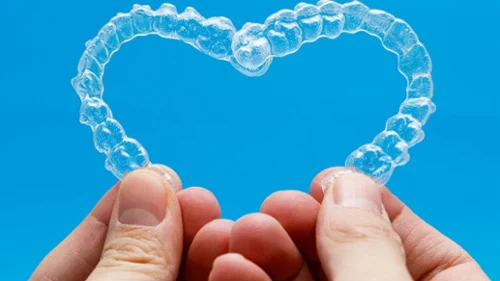

Clear aligners for adults offer a discreet way to straighten teeth, improve alignment, and address teeth that have shifted after braces.
Treatment begins with a dental assessment and a personalized plan, followed by daily aligner wear and regular progress checks. Once active treatment is complete, retainers help maintain your results.
Your biggest daily commitment is keeping the trays in for the prescribed hours while making time for meals and cleaning.
Your longer-term commitment is retainer wear. A realistic plan accounts for both, along with your dental health, budget, and bite.
Are Clear Aligners Right for Your Teeth and Lifestyle?
You may be a good candidate for clear aligners if your teeth, gums, and supporting bone are healthy enough for orthodontic movement and you can commit to consistent daily wear.
Can Aligners Treat Crowding, Gaps, and Bite Issues?
Your mild to moderate crowding or gaps may respond well to clear aligners. Certain bite issues also qualify, including some overbites, crossbites, and open bites.
Your clinician needs to check whether the problem comes from tooth position, jaw position, or both.
For complex bite concerns, your orthodontic treatment might involve braces, elastics, or a combined approach. You should receive an explanation of which movements are predictable in your case.
What Dental Health Issues Need Attention First?
You need a stable foundation before moving your teeth. Untreated cavities, active gum disease, and damaged dental restorations may need treatment before clear aligner therapy begins. Addressing these concerns helps establish a healthy foundation for orthodontic movement.
Your dentist should also check gum recession and the bone supporting your teeth.
If you have a history of gum disease, periodontal treatment may be necessary to establish stable gum health before orthodontic treatment begins.
Any planned filling or crown should be discussed before scanning because changes to a tooth’s shape affect tray fit.
Clear Aligners vs. Traditional Braces: Benefits and Trade-Offs
You gain flexibility with removable trays, along with responsibility for putting them back in. When weighing clear aligners vs. traditional braces, consider your workday, eating habits, and ability to keep track of an appliance.
| Your consideration | Clear aligners | Traditional braces |
| Appearance | Clear trays; visible attachments possible | Visible brackets and wires |
| Removal | You remove them | Fixed to your teeth |
| Meals | Trays come out | Food restrictions apply |
| Cleaning | Direct brushing and flossing | Cleaning around hardware |
| Wear responsibility | Daily wear target | Appliance stays attached |
The benefits of clear aligners include easier access for brushing and fewer appliance-related food limits. You still need to protect your teeth from trapped food and drinks.
Your clinician should explain whether fixed braces offer better control for your specific movements.
What Happens Before Your First Trays Arrive?
Before your custom aligners arrive, you complete dental records, review the proposed movements, and agree on treatment costs.
At Harmony Dentistry, clear aligner treatment begins with a clinical assessment to determine whether removable aligners are appropriate for your alignment needs and oral health.

Your Consultation, Dental Examination, and Digital Scans
At Harmony Dentistry, Dr. Alicia Neidlinger emphasizes patient education and personalized treatment planning.
Your clear aligner consultation begins with a discussion of your smile goals, previous orthodontic treatment, and any concerns about your bite or jaw comfort.
A dental examination and appropriate diagnostic records help determine whether clear aligners are suitable for your needs.
During your first dental visit, expect a review of your teeth and gums alongside your treatment goals. Your records may include photographs, digital scans, and X-rays selected for your needs.
A surface scan records tooth shape; X-rays provide information about roots and supporting bone.
How Your Custom Treatment Plan and Trays Are Made
Your clinician uses your records to build a custom treatment plan that divides tooth movement into stages. Each tray in your aligner series is made to guide a planned step.
Your plan should identify any tooth-colored attachments or elastics you need. If space is needed between teeth, your clinician might recommend interproximal reduction, which means removing a small amount of enamel between selected teeth.
Ask to review these steps before approving treatment, and treat the digital preview as a planned outcome without a guarantee.
What Should Your Treatment Quote Include?
Your written quote should make clear what you are paying for and what would cost extra. Ask about each of these items:
- Your examination, scans, and treatment records.
- Your initial aligner series and fitting appointments.
- Your attachments, elastics, or planned enamel reduction.
- Your progress checks, including any remote monitoring.
- Your refinement trays and any limits on them.
- Your retainers and replacement fees.
- Your charges for lost or damaged trays.
Before starting clear aligner treatment, review your estimated out-of-pocket costs and available insurance and financing options.
Adult orthodontic benefits vary by insurance plan and may be subject to eligibility requirements, lifetime maximums, and other limitations.
What Is Daily Life Like During Treatment?
Your daily routine centers on wearing your trays, removing them for meals, and cleaning before reinsertion. Planning around your usual meals and work breaks makes clear aligner treatment easier to manage.
Your First Fitting, Attachments, and Initial Adjustment
At your first fitting, your clinician checks that the trays sit properly and shows you how to insert and remove them. Practice removal before leaving, especially if your teeth have attachments.
You might notice pressure, extra saliva, or a temporary change in speech as you adjust. Attachments give the tray extra grip for planned movements, and they remain on your teeth when you remove the aligners.
Ask your team to check any edge that rubs or cuts your mouth.
How Many Hours Should You Wear Aligners Each Day?
Clear aligners generally need to be worn for 20 to 22 hours each day, depending on your prescribed treatment plan.
Follow your dentist’s specific wear instructions and remove your trays only when necessary for meals, drinks other than water, and oral hygiene.
If your daily routine makes consistent wear difficult, discuss it with your dental team early in treatment.
Eating, Drinking, and Keeping Teeth and Trays Clean
Remove your trays for food and drinks other than plain water. Hot drinks may distort the aligner material, while sugary or acidic beverages can become trapped between the trays and your teeth, increasing the risk of tooth decay and enamel erosion.
Brush with fluoride toothpaste and clean between your teeth as directed. After meals, clean your mouth before reinserting your trays; if brushing is temporarily unavailable, rinse thoroughly with water and brush when you have access.
Clean your aligners with the products your dental team recommends and avoid hot water. Keep a case with you so your trays stay protected during meals. Wrapping them in a napkin makes accidental disposal easy.
What Should You Do About Soreness or a Lost Tray?
Mild pressure after a tray change should ease as you adjust. Soft foods and a pain reliever approved for your health history can help you manage the early discomfort.
Contact your dental team for persistent or worsening pain, swelling, a sharp edge, or a tray that will not seat. Severe pain deserves prompt assessment, even if you recently changed trays.
If you lose a tray, call before moving forward in the series. Keep your previous set available so your clinician has an option to help maintain tooth position while arranging the next step.
How Long Does Treatment Take, and How Is Progress Checked?
Your treatment length follows the movements your teeth need and how they respond to the plan.
Scheduled reviews let your clinician compare your progress with the intended result and adjust your orthodontic treatment when needed.
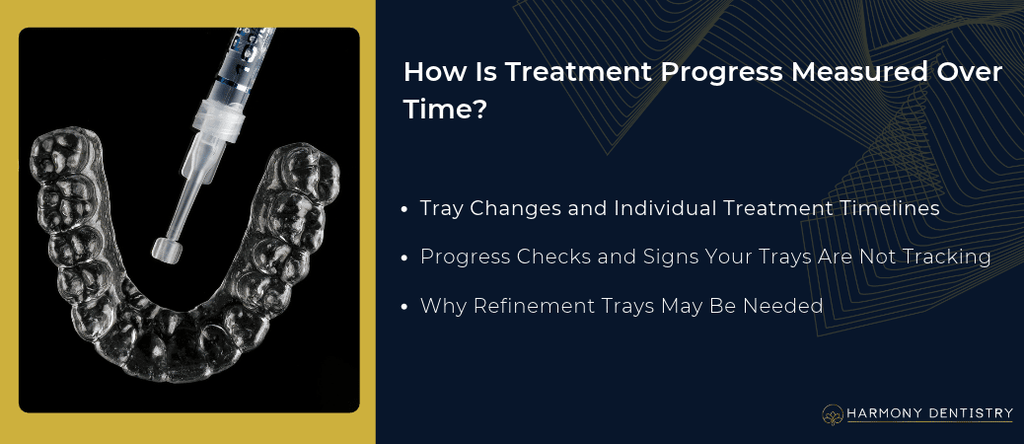
Tray Changes and Individual Treatment Timelines
Change trays only on your prescribed schedule. Your intervals may fall around one to two weeks, with changes based on fit and tooth movement.
Your overall treatment timeline may include initial preparation, the first aligner series, and additional refinement trays if needed.
Your dentist can provide an estimated timeline based on your treatment goals and how your teeth respond.
Progress Checks and Signs Your Trays Are Not Tracking
Your progress checks assess tray fit, attachment condition, and how your teeth meet. Depending on your plan, you might have in-office visits, remote photo checks, or both.
“Tracking” means your teeth are following the planned movements. A growing gap between a tooth and its tray, rocking plastic, or an attachment that no longer fits its pocket needs attention.
Send your team a clear photo and ask for instructions before advancing to another tray.
Why Refinement Trays May Be Needed
Your dentist may recommend refinement trays if your teeth have not completed the planned movements or your bite requires further adjustment after the initial aligner series.
Your teeth’s response to pressure does not always match the digital plan exactly.
Your clinician takes updated records and revises your custom treatment plan to address what remains. Ask how refinements affect your estimated finish date and whether they fall within your original fee.
Keep wearing the prescribed tray while you wait for instructions or new aligners.
What Happens After Your Last Aligner?
After your last aligner, you need a clinical review and a retention plan before stopping active treatment.
Your final treatment review should address any remaining bite concerns and establish a personalized plan for maintaining your tooth alignment.
Final Bite Checks and Attachment Removal
Your final check should assess how your upper and lower teeth meet, along with their alignment. Tell your clinician if one tooth hits first or chewing feels uneven.
Once your result is accepted, your team removes attachments and checks the tooth surfaces. You also need retainer records and clear instructions for what to wear while your retainers are being made.
If your broader smile makeover plan includes bonding or crowns, coordinate that work with retainer fabrication.
Your Retainer Schedule and Long-Term Maintenance
Your retainer schedule is prescribed to hold your teeth in their new positions. You might begin with full-time wear and later move to nighttime wear, depending on your clinical needs.
Plan for long-term retention because your teeth continue to shift throughout adulthood. Your retainer may be removable, bonded behind your teeth, or a combination of both. Keep it clean, protect it from heat, and bring it to dental visits for fit checks.
When you consider the benefits of clear aligners, include the follow-through needed to preserve your alignment.
Continue routine general dentistry visits and maintain thorough cleaning around any fixed retainer wire to help protect your teeth and gums after orthodontic treatment.
What to Do if Your Retainer Feels Tight or Breaks
Contact your dental team promptly if your retainer becomes tight, cracks, or stops fitting fully. Tightness after missed wear needs advice because your teeth might have shifted.
Avoid forcing a painful retainer into place or reshaping it yourself. If a bonded wire comes loose, arrange a check even when it feels comfortable. Ask whether you should use a backup retainer while waiting for repair or replacement.
Plan for Consistent Wear and Lasting Maintenance

You get the most useful start with clear aligners for adults by confirming your suitability, daily responsibilities, and full treatment costs before committing.
Your plan should also explain how progress is checked and what happens if you need refinements.
If your goals include other cosmetic dental treatment, discuss its timing before your final retainers are made. Leave your consultation with written wear instructions, a clear fee agreement, and an explanation of long-term retainer wear.
Frequently Asked Questions
You should resolve practical questions about your schedule, dental work, and budget before starting clear aligner treatment.
Am I too old to straighten my teeth with clear aligners?
Your age alone does not rule out clear aligners for adults. Your gum health and bone support help determine whether moving your teeth is safe, and your clinician should account for existing restorations.
What do adults wish they knew before starting clear aligners?
You benefit from knowing how much frequent snacking and long coffee breaks affect your available wear time. Ask for a removal demonstration and a plan for cleaning at work before your first tray arrives.
Is $6,000 a lot for clear aligner treatment?
You need the scope of the quote to judge whether $6,000 offers good value for your care.
Compare the proposed correction, clinician oversight, refinement coverage, and retainers, then request another clinical opinion if the fee or plan remains unclear.
Is there a 30-minute rule for eating with aligners?
You do not have a universal 30-minute meal limit; your total daily wear target controls your time out of trays.
If you mean waiting before brushing after acidic food or drinks, ask your dentist how to balance enamel care with reinsertion, and rinse with water in the meantime.
Can I get clear aligners if I have crowns or implants?
A natural tooth restored with a dental crown may still be moved orthodontically if its root and supporting tissues are healthy.
A dental implant, however, remains fixed in the jawbone and cannot move like a natural tooth. Your dentist must account for existing implants and restorations when planning aligner treatment.