

A dental implant consultation gives you the chance to learn whether implants fit your needs and what treatment would look like for you.
Asking the right questions during your consultation helps you understand the different implant options, procedure, compare your replacement options, and make a confident decision about replacing missing teeth.
Many people arrive at their first appointment unsure what to ask or what information matters most.
Your consultation should cover your health history, the steps involved in getting an implants, how long treatment takes, what risks to expect, and what the total cost will be.
Bringing a checklist of questions ensures you leave with clear answers instead of more confusion. The ten questions below help you prepare for a productive conversation with your dentist.
Whether you are replacing one tooth or several, knowing what to ask makes the process less overwhelming.
These questions address everything from your candidacy and bone health to materials, recovery time, and payment options.
Key Takeaways
- Prepare questions about your health history, candidacy, and bone support before your consultation appointment
- Ask about treatment steps, timeline, material options, risks, recovery expectations, and total costs during your visit
- Choose a provider with specialized training who explains your options clearly and gives you time to decide
Use our dental implant consultation checklist to prepare for your treatment journey.
Table of Content
- Assessing Your Implant Candidacy and Health Factors
- Exploring Implant Options and Material Choices
- Understanding the Dental Implant Process and Timeline
- Addressing Risks, Complications, and Recovery
- Evaluating Costs, Experience, and Provider Qualifications
- Frequently Asked Questions
Assessing Your Implant Candidacy and Health Factors
Not everyone is automatically ready for dental implants. Your eligibility depends on several physical factors including your bone structure, gum condition, and overall medical background.
Key Criteria for Implant Suitability
Being a good candidate for dental implants starts with having enough healthy bone and gum tissue to support the implant.
Your implant dentist will evaluate whether you have sufficient jawbone volume to anchor the titanium post securely.
If you’ve been missing teeth for a long time, your bone may have deteriorated and become too thin or weak.
You also need healthy gums free from active infection or inflammation.
Candidacy for dental implants goes beyond simply having missing teeth and requires assessment of gum health, bone volume, and medical history.
Your age matters less than your physical health. Most adults with fully developed jawbones can qualify for implants.
However, certain lifestyle habits like heavy smoking can reduce your chances of success because they interfere with healing.
Understanding the Role of Bone Density and Gum Health
Bone density determines whether osseointegration can occur properly. This is the process where your jawbone fuses with the implant post over several months.
Without adequate bone density, the implant won’t integrate and could fail.
Your periodontist or oral surgeon will likely take X-rays or CT scans to measure your bone density. If your bone is too thin or soft, you might need a bone graft before getting implants.
A bone grafting procedure adds material to strengthen your jaw. Some patients also require a sinus lift when placing implants in the upper jaw.
Gum health is equally critical. Active periodontal disease must be treated before your dental implant consultation moves forward.
Infected or inflamed gums can’t support implants properly and increase the risk of failure.
How Medical History Impacts Implant Success
Your medical conditions and medications directly affect how well implants heal. Uncontrolled diabetes slows healing and increases infection risk.
Heart disease, immune disorders, and blood clotting problems may also complicate treatment.
Tell your implant dentist about all medications you take. Blood thinners can cause excessive bleeding during surgery. Bisphosphonates used for osteoporosis may interfere with bone healing.
Radiation therapy to the head or neck can damage jawbone tissue and reduce implant success rates. Autoimmune diseases that affect healing should be discussed during your implant consultation.
Your dentist needs this complete picture to determine if you’re ready for treatment or if you need additional preparation first.


Exploring Implant Options and Material Choices
Different implant types and materials serve specific purposes based on your bone structure, budget, and treatment goals.
Understanding these choices helps you make informed decisions with your dental team.
Types of Dental Implants and Their Uses
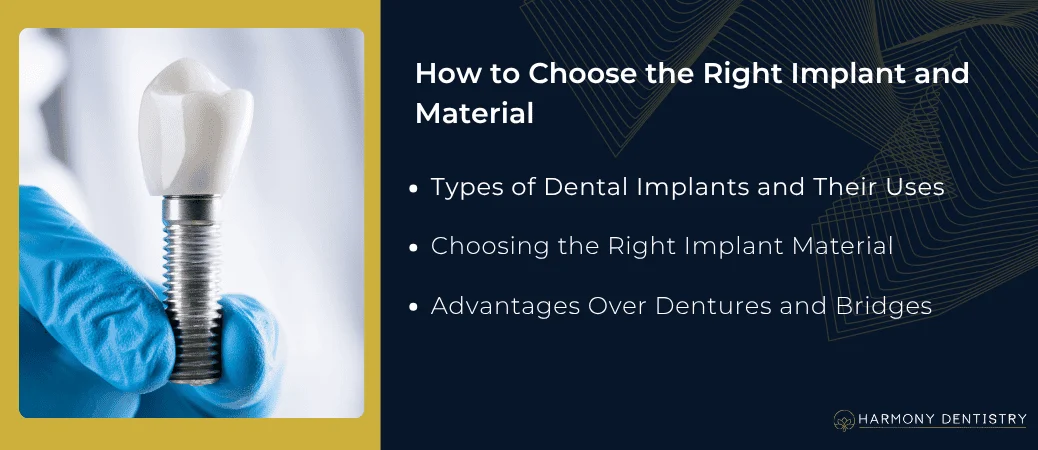
Endosteal implants are the most common type used in implant dentistry. These screw-shaped posts are placed directly into your jawbone and work well if you have adequate bone density.
They can support single crowns, bridges, or full arches of replacement teeth.
Subperiosteal implants sit on top of your jawbone but beneath your gum tissue.
Your dentist might recommend these if you don’t have enough healthy jawbone for traditional implants and want to avoid bone grafting procedures.
Mini implants are smaller in diameter than standard implants. They’re often used to stabilize traditional dentures or in areas with limited space, like narrow gaps between teeth.
The placement procedure is less invasive and typically requires shorter healing time.
An implant-supported bridge replaces multiple missing teeth using fewer implants than individual replacements.
This approach can reduce your overall treatment time and cost while still providing stable, long-lasting results.
Choosing the Right Implant Material
Most implant materials are either titanium or zirconia. Titanium has been used successfully for decades and fuses well with bone tissue through a process called osseointegration.
It’s strong, lightweight, and works for most patients.
Zirconia implants are a metal-free alternative. They’re white in color, which can be beneficial for front teeth where gum tissue is thin.
Some patients prefer zirconia if they have metal sensitivities or want an all-ceramic option.
Your implant system includes the post, abutment, and crown. Ask your provider what type of implant material will be used and why they’re recommending it for your specific case.
The material choice affects durability, appearance, and how your body responds to treatment.
Advantages Over Dentures and Bridges
Dental implants don’t require grinding down healthy adjacent teeth like dental bridges do. This preserves more of your natural tooth structure and supports long-term oral health.
Unlike traditional dentures that rest on your gums, implants stimulate your jawbone like natural tooth roots.
This prevents bone loss that typically occurs after tooth loss. Your facial structure stays more stable over time.
Implants feel and function more like natural teeth compared to removable dentures. You can eat your favorite foods without worrying about slipping or clicking.
Daily care is simpler since you brush and floss them just like regular teeth.
The advantages of dental implants include better durability and longevity. While dentures need replacement every 5-10 years, properly maintained implants can last 20 years or longer with good care.
Understanding the Dental Implant Process and Timeline
The dental implant process typically takes 4 to 7 months from start to finish, though cases requiring bone grafting may extend to 12 months.
Each stage builds on the previous one, from surgical placement through osseointegration to the final crown attachment.
Stages of Implant Surgery and Placement
Your dental implant procedure begins with the surgical placement of a titanium post into your jawbone.
During implant surgery, your dentist numbs the area and creates a small opening in your gum tissue to access the bone. The implant post is carefully inserted into the prepared site at a specific depth and angle.
If you need multiple implants, your dentist may place them all during one appointment. The entire implant placement procedure usually takes 1 to 2 hours per implant.
After the implant surgery, your dentist stitches the gum tissue closed. Some cases allow for same-day temporary teeth, while others require you to wait until healing completes.
Your treatment plan determines which approach works best for your situation.
Immediate placement vs. delayed placement:
- Immediate: Implant placed right after tooth extraction
- Delayed: Implant placed 3 to 6 months after extraction once the socket heals
What to Expect During Healing and Osseointegration
Osseointegration is the process where your jawbone grows around and fuses with the titanium implant post.
This healing period typically lasts 3 to 6 months, depending on your bone quality and the implant location.
Lower jaw implants often heal faster than upper jaw implants because the bone is denser. You won’t feel osseointegration happening, but it’s the most critical phase of your dental implant process.
During healing time, you’ll avoid chewing on the implant site and follow your dentist’s care instructions. Most people return to normal activities within a few days after surgery.
Once osseointegration completes, you’ll return for abutment placement. The abutment is a connector piece that attaches to your implant and holds the crown.
Your dentist reopens the gum tissue, attaches the abutment, and takes impressions for your final crown. The abutment and crown phase adds another 2 to 4 weeks to your timeline.
The Role of Digital Technology in Treatment Planning
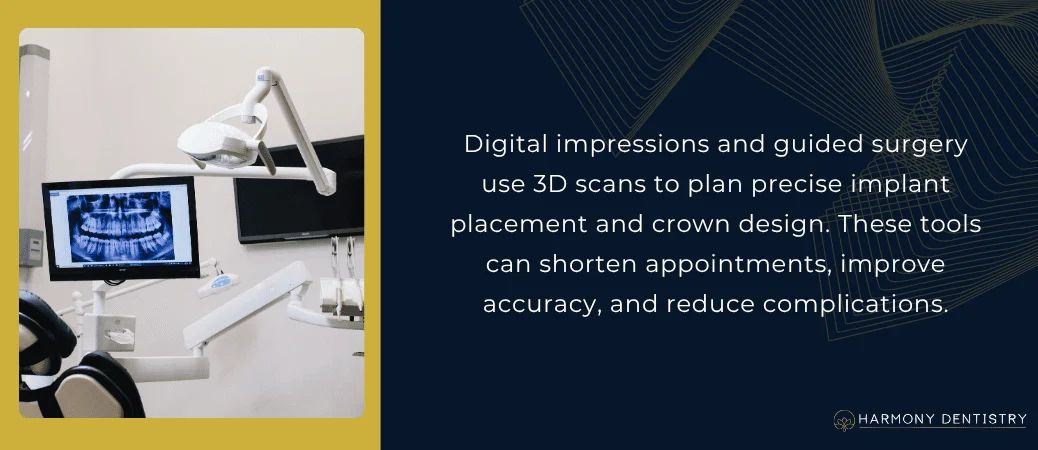
Digital impressions replace traditional putty molds and create precise 3D images of your mouth using an intraoral scanner.
These scans help your dentist design your crown and plan the exact position for your implant placement before surgery begins.
Guided surgery uses specialized software to map your jawbone structure from CT scans.
Your dentist creates a custom surgical guide that fits over your teeth and shows exactly where to place the implant. This technology improves accuracy and often reduces healing time.
Benefits of digital technology:
- More precise implant positioning
- Shorter appointment times
- Better final results
- Reduced risk of complications
Many practices now offer same-day treatment planning using digital tools. You can see a simulation of your final results before starting treatment.
Addressing Risks, Complications, and Recovery
Every surgical procedure carries some level of risk, and dental implants are no exception.
Understanding what can go wrong, how to prevent problems, and what proper aftercare looks like will help you heal successfully and keep your implants healthy for years to come.
Common Complications and How to Spot Them
Infection is one of the most common complications after implant surgery. You might notice increased swelling, persistent pain, or discharge around the implant site.
These signs mean you should contact your implant dentist right away.
Implant failure happens when the implant doesn’t fuse properly with your jawbone during osseointegration. This process normally takes several months.
If you feel movement in the implant or experience ongoing discomfort, something may be wrong.
Nerve damage can occur if an implant is placed too close to a nerve. You might feel numbness, tingling, or pain in your gums, lips, or chin. While rare, this requires immediate attention from your oral surgeon.
Periodontal disease around the implant site can threaten your implant’s stability. Watch for red, swollen, or bleeding gums.
Sinus problems can develop when upper jaw implants penetrate the sinus cavity, causing pressure or congestion.
Steps to Reduce the Risk of Implant Failure
Choosing an experienced implant dentist or oral surgeon makes a big difference in your outcome. Ask about their training, success rates, and how they handle complications.
Smoking significantly increases your risk of implant failure. Nicotine restricts blood flow and slows healing. If you smoke, quitting before surgery gives you the best chance of success.
Your overall health matters too. Uncontrolled diabetes, certain medications, and immune system disorders can affect healing. Be honest with your provider about your medical history.
The implant material matters as well. Most implants use titanium because it fuses well with bone. Ask your provider why they recommend a specific material for your case.
Bone quality plays a crucial role in implant success. If your jawbone is too thin or soft, you might need bone grafting first. This extra step strengthens the foundation for your implant.
Aftercare and Maintenance for Long-Term Success
Immediate post-surgery care includes:
- Taking prescribed antibiotics to prevent infection
- Using ice packs to reduce swelling
- Eating soft foods for the first few weeks
- Avoiding smoking and alcohol
Your daily cleaning routine protects your investment. Brush twice daily with a soft-bristle toothbrush.
Use interdental brushes to clean around the implant posts where regular floss can’t reach. These small brushes remove food particles and plaque that threaten gum health.
Regular dental visits let your provider monitor your implants and catch problems early. Most offices recommend checkups every six months.
During these visits, your dentist checks the implant stability, examines your gum health, and removes any buildup.
With proper care, dental implants can last 20 years or longer. Your home care habits and lifestyle choices directly impact how long your implants stay healthy and functional.
Evaluating Costs, Experience, and Provider Qualifications
Understanding the financial investment and verifying your provider’s background are critical steps before committing to dental implants.
You need clear answers about pricing, your dentist’s training, and how the team works together.

Breakdown of Implant Costs and Payment Options
When you attend your dental implant consultation, ask for a detailed cost breakdown that covers every step.
This should include the implant system itself, surgical fees, anesthesia options like local anesthesia, IV sedation, or oral sedation, and any follow-up visits.
Some patients need extra procedures before surgery. Ask if you’ll need bone grafting or other prep work and how that affects your timeline and total cost.
Find out what your out-of-pocket cost will be after insurance. Many offices offer financing plans to help spread payments over time.
Get everything in writing so you can compare options between providers and avoid surprise bills later.
Questions to Assess Your Provider’s Experience
Your implant dentist’s training and track record matter a lot. Ask about their specific experience with dental implants and how many procedures they’ve completed.
The Committee on Dental Accreditation recognizes specialists like prosthodontists, oral surgeons, and periodontists who have extensive implant training.
Request information about their success rate and how often they encounter complications. A qualified provider will share this data openly.
You should also ask what happens if an implant fails and what their protocol is for handling issues.
Don’t hesitate to get a second opinion if you need more information. Good providers support your right to explore all options before moving forward with treatment.
The Importance of Teamwork and Communication
The dental implant process works best when one coordinated team handles your care. Ask if all procedures happen in one office with one team or if you’ll be referred to multiple locations for different steps.
Working with a single team means better communication between your oral surgeon, periodontist, and other specialists involved in your care.
This setup reduces confusion and keeps everyone on the same page about your treatment plan.
Pay attention to how your provider answers questions during your implant consultation. They should explain things clearly and make you feel comfortable asking for more details whenever you need them.
Frequently Asked Questions
These questions address common concerns about candidacy, testing requirements, treatment options, timelines, potential risks, and costs.
Understanding these details helps you make informed choices about your dental implant treatment.
Am I a good candidate for dental implants, and what factors could affect my eligibility?
Your dentist will look at several factors to decide if dental implants are right for you. Healthy gums and enough jawbone to support the implant are the main requirements.
Certain conditions can affect your eligibility. Smoking, uncontrolled diabetes, and some medications may slow healing or increase risk of failure. Bone loss in your jaw might mean you need a bone graft first.
Your overall health matters too. If you have heart conditions or take blood thinners, your dentist needs to know. Age isn’t usually a problem as long as your jaw has finished growing.
What tests or imaging will you need before treatment, and what will they show?
Your dentist will likely take X-rays or CT scans to see your jawbone structure. These images show how much bone you have and where nerves and sinuses are located.
3D imaging helps your dentist plan the exact placement of each implant. This technology shows the depth, width, and angle needed for the best results. The scans also reveal any bone loss or infection that needs treatment first.
You may also need a physical exam of your gums and remaining teeth. Your dentist will check for gum disease or other oral health issues that could affect healing.
What implant options do I have (like single tooth, multiple teeth, or full-arch), and which do you recommend for me?
Single tooth implants replace one missing tooth with one post and one crown. This option works well when you have healthy teeth on both sides of the gap.
Multiple teeth can be replaced with several individual implants or an implant-supported bridge. A bridge uses two or more implants to support several replacement teeth. This costs less than replacing each tooth separately.
Full-arch implants replace all your upper or lower teeth. These use four to six implants to support a full set of teeth. Your dentist will recommend the best option based on how many teeth you’re missing and your bone health.
What’s the full timeline from start to finish, including healing time and when I’ll get the final crown or teeth?
The dental implant process usually takes several months from start to finish. Your first appointment includes consultation, imaging, and treatment planning.
The surgery to place the implant post happens next. After that, you’ll need three to six months for the bone to fuse with the implant. This healing period is called osseointegration and it’s important for long-term success.
Once healing is complete, your dentist places an abutment on top of the post. You’ll wait a few more weeks for your gums to heal around it. Finally, your custom crown or teeth are attached to complete the process.
What are the risks and possible complications in my specific case, and how do you handle them if they happen?
Infection and implant failure are the biggest risks with dental implants, though both are rare. Your dentist should explain how they monitor healing and prevent these problems.
Some patients experience nerve damage that causes numbness or tingling. Sinus problems can occur if an upper implant extends into the sinus cavity. Your dentist uses imaging to plan around these sensitive areas.
Ask how often your dentist sees complications and what they do to fix them. A good provider will have clear protocols for replacing failed implants or treating infections.
They should also tell you warning signs to watch for during healing.
What will the total cost include, and what financing or insurance options are available?
Get a clear breakdown of all costs before you start treatment. The total should include the consultation, imaging, surgery, anesthesia, and the final crown or teeth.
Some quotes don’t include follow-up visits or possible adjustments. Ask if bone grafting or other prep work might add to the cost. These extras can significantly change your final bill.
Many dental offices offer payment plans or financing options. While most implant centers don’t accept insurance directly, some insurance companies will reimburse part of your claim.
Check with your insurance company to see what coverage you might have.